It’s time leadership spoke.
The Top 10 C-Suite Voices
Spotlighting visionary executives who shape strategy and culture — beyond titles, beyond politics, beyond PR.
About the initiative
What is Top 10 C-suite Voices ?
It’s a curated celebration of executives who are reshaping leadership with vision, integrity, and strategic depth.
We spotlight one leader at a time - real people, real decisions, real impact.
Built by those who believe leadership should be transparent, accountable, and timeless, Top 10 C-Suite Voices brings forward the stories of those who redefine what power looks like.
→ Published exclusively through Top10CSuiteVoices.com and LinkedIn, the platform showcases one executive voice at a time - connecting leadership, business, and society in a conversation that finally feels real.(Leading to the first ever Top 10 Voices Awards, where HR, Employee, and C-Suite leaders will share one stage.)
*Final dates and locations are subject to confirmation of funding, and may shift to ensure the awards meet the standard and scale they deserve.
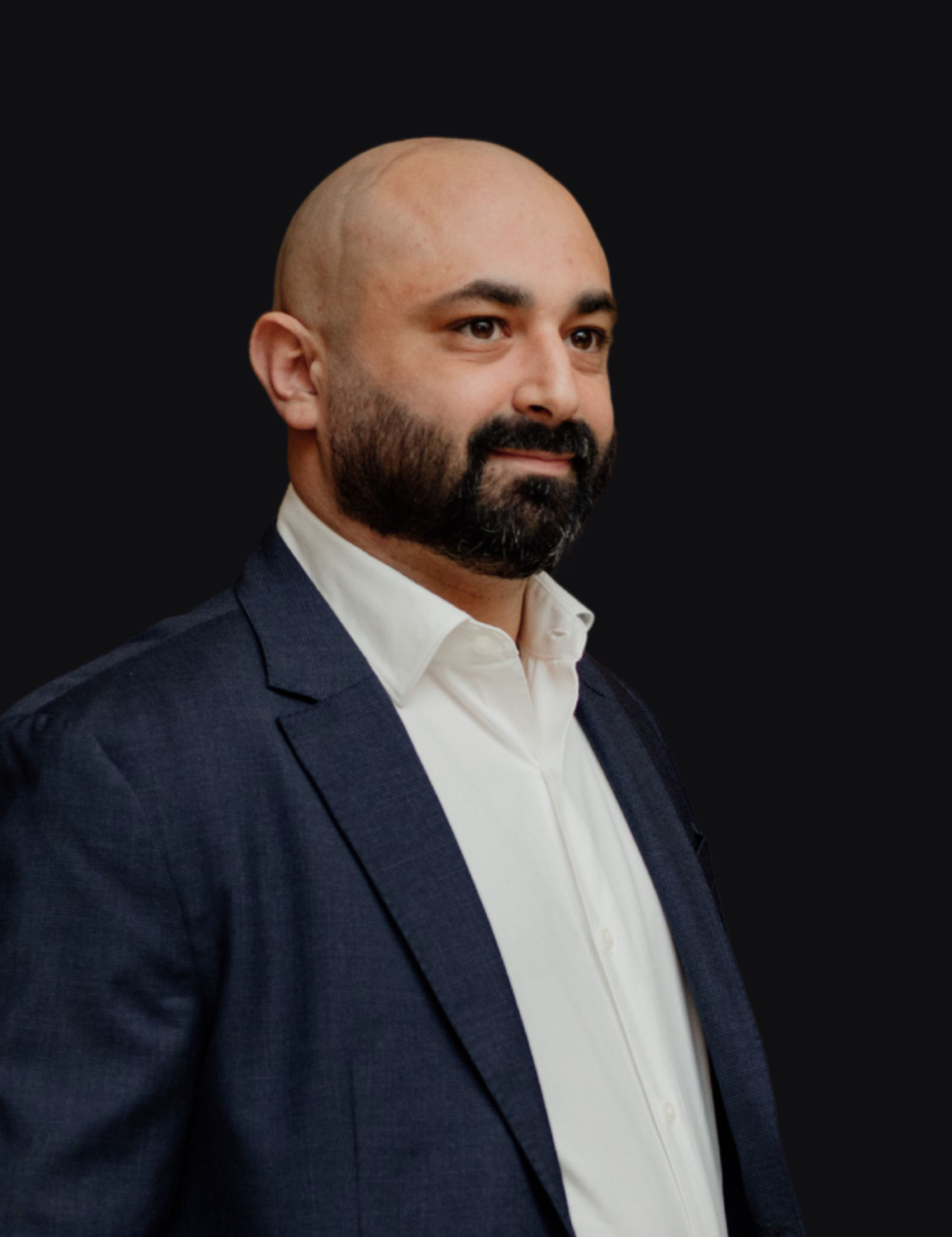
THIS MONTH
This Month’s Featured Voice
Every two weeks, we feature one voice shaping how leadership thinks, decides, and evolves.No noise.
No borrowed wisdom.Just sharp perspective with real executive relevance.
The "Leadership Architect" Voice
Great CEOs Fail Because of the Team They Didn’t Build
“The most expensive mistake I see is not hiring the wrong individual. It is hiring the right individual into the wrong system.” - Elysseos Odesseos -
CEO of Stealth72 | August 11 2026 · 7 min read
I’ve spent years recruiting and advising CEOs on leadership hires across various markets and industries. Different mandates, geographies, and leadership structures, one pattern has repeated itself with consistency:• Most leadership failures are not CEO failures, but failures of the team.I have noticed that when performance drops, when transformation is idle, or when a strategy quietly collapses under its own weight, the instinct is almost always the same it the direction of the CEO. Sometimes that’s justified, often it isn’t.From my experience I have commonly seen that highly capable CEOs are operating with teams that were never designed to carry the weight of the mandate they have been given.
The illusion of the “strong CEO”
Boards like clarity & investors like accountability. The CEO becomes the focal point because it simplifies both. However, leadership at scale is not a single player role.A CEO can set direction, define ambition, and establish rhythm. What they can’t do sustainably is execute across finance, operations, commercial, risk, and people without a leadership structure that is both aligned and capable.The company begins to fracture not because individuals are incompetent. In many cases, they are experienced, and credible, it’s normally the case that they were not selected or integrated as a system.
Where it actually fractures
The failures I encounter rarely announce themselves early, they build quietly.• A CFO who is technically strong but misaligned with the CEO’s appetite for risk.
• A COO who optimises for stability when the business requires transformation.
• A CHRO focused on process when the organisation needs a cultural reset.
• A CTO who is technically strong but misaligned with the CEO’s appetite for speed and innovation.
• A CMO who optimises for brand consistency when the business requires aggressive repositioning.Individually these are not poor hires, collectively they create inefficiency.What emerges is not open conflict, but something more dangerous subtle misalignment, decisions slow down. Trade offs become political, execution loses coherence.The CEO, in response, compensates taking on more, stepping deeper into functions, narrowing decision loops and becoming to hands on for a time this may work until it doesn’t.
The cost no one calculates
By the time a leadership team issue becomes visible, the cost has already been paid, not just in financial terms, often significantly but mainly in loss of momentum.I’ve seen organisations spend 12–18 months in what appears to be “progress”,while in reality, they are cycling through misaligned priorities, strategy gets reinterpreted at each layer, initiatives are launched but not landed and talent below the C-level disengages not because they lack direction, but because they receive too many versions of it.This leads to the erosion of trust, until the organisation stops believing that the leadership team is truly leading.
The myth of the “one critical hire”
There is a frequent tendency especially at board level to treat leadership gaps as isolated problems.• “We need a stronger CFO.”
• “We need a more commercial COO.”
• “We need to upgrade HR.”Each of these statements may be true, but they are often incomplete because the real question is not whether an individual is strong. It is whether the team configuration is fit for purpose. The most expensive mistake I see is not hiring the wrong individual, It is hiring the right individual into the wrong system.A high performing executive placed into a misaligned leadership dynamic will either:• Adapt downward
• Become ineffective
• Simply leaveThis results in nothing being solved.Designing the team, not just filling the roles
What separates leadership teams that deliver from those that struggle is not brilliance at the individual level, I believe it is intentional design. The strongest CEOs I’ve worked with do something differently. They do not ask:• “Who is the best CFO we can hire?”They anchor first on the leadership system required to execute their vision and only then focus on individuals. That shift changes everything.It forces clarity on:• Decision rights
• Risk appetite
• Pace of execution
• Cultural expectationsFrom there, hiring becomes a question of fit within a system, not just capability within a role, equally it requires the courage to make changes early. From what I have seen misalignment at the top does not correct itself, it actually compounds.
A harder truth about leadership
There is a narrative in business that celebrates the individual leader, the decisive CEO who turns organisations around through force of vision and personality. It’s a “exciting story” often It is also incomplete.What I have seen, consistently, is that leadership is less about individual brilliance and more about the collective (those surrounding the CEO). A CEO with a perfectly aligned, highly capable team will outperform a stronger individual surrounded by misaligned executives (every time). The focus is normally on the individual, perhaps because it is easier to measure and communicate also to change.Redesigning a leadership team is more complex. It requires confronting trade offs, relationships, and sometimes difficult truths about people who are on paper successful, avoiding that work ultimately creates failure.
What this means for boards and CEOs
If there is one shift or “word of advice” I would encourage it is this:• Stop treating leadership as a series of individual appointments, start treating it as a system.Before making the next C-level hire, ask:• What is currently misaligned in how this team operates?
• Where are decisions slowing or breaking down?
• What capabilities are missing not in isolation, but in combination?
• Are we designing a team that can carry the strategy or one that simply looks strong on paper?
Final thought
In every failed leadership situation I’ve encountered, there is a moment often early where the signals were visible, but they were often dismissed. This is normally down to:• Individually, the executives were credible.
• Structurally, the organisation looked sound.
• The CEO was expected to make it work.In my opinion the reality is simpler, and harder:Leadership does not fail at the top; it fails in the space between the people at the top and that space is not accidental. It is either designed or neglected.
By Elysseos Odysseos for Top 10 C-Suite Voices Global Edition
Editor’s Note:
Some leadership questions are not really about the leader.They are about the system surrounding them.In this contribution to Top10 C-Suite Voices, Elysseos Odysseos challenges one of the most persistent assumptions in executive leadership: that when performance deteriorates, the first place to look is the CEO.His argument is more uncomfortable, and far more useful.Great CEOs can still struggle when the leadership team around them was never intentionally designed to carry the weight of the strategy. The issue is not always individual capability. It is alignment, decision rights, pace, risk appetite, culture and, ultimately, whether the people at the top function as a system.As Honorary Editorial Chair of Top10 C-Suite Voices, Elysseos brings a perspective shaped by years of working closely with CEOs, boards and executive leadership teams across complex markets.His contribution to the Top10 ecosystem extends well beyond this article, and we look forward to sharing more of that journey in due course.For now, his message is simple, and difficult to ignore:Leadership does not fail because the wrong person is always at the top. Sometimes it fails because the right people were never designed to lead together.
About Elysseos Odesseos:
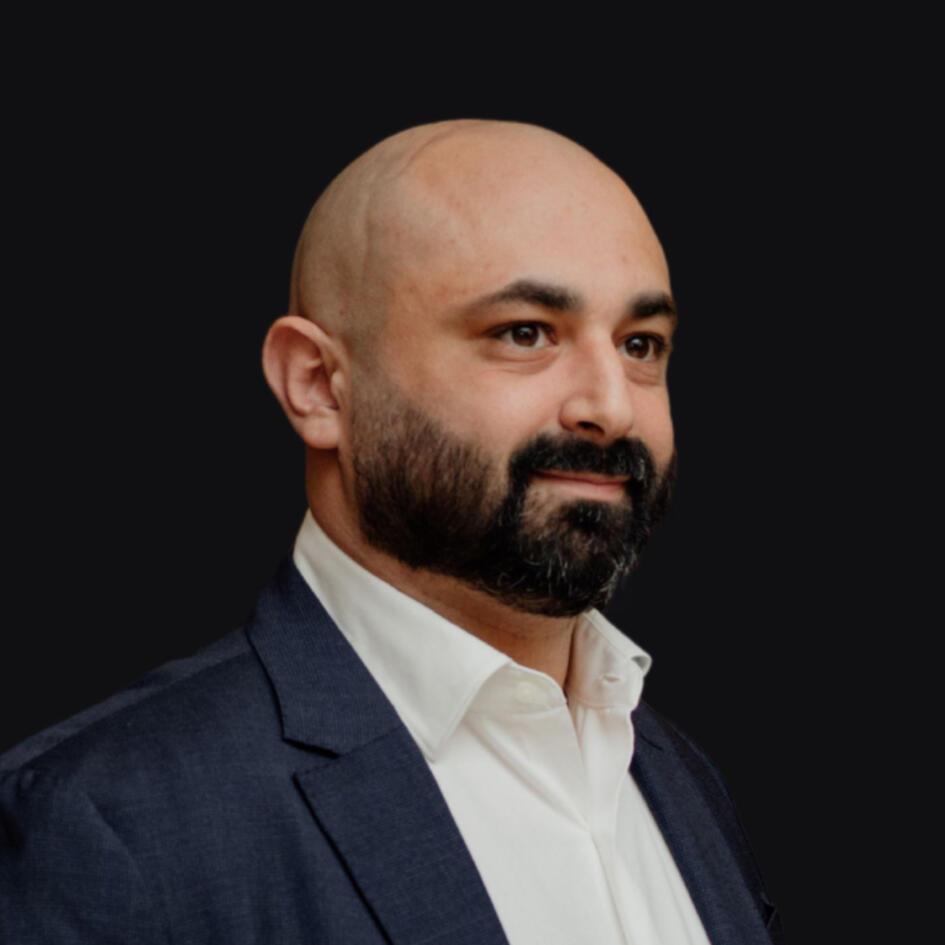
Elysseos is CEO of Stealth72, advising boards and CEOs on succession planning, leadership strategy, and architecture of high performance teams. Through a disciplined, insight led approach to executive search and leadership advisory, he delivers C-suite, C-1, and emerging talent solutions. His work builds enduring pipelines that drive execution, strengthen governance, and sustain longterm value across complex, evolving markets.
CEO of Stealth72
or
Up Next
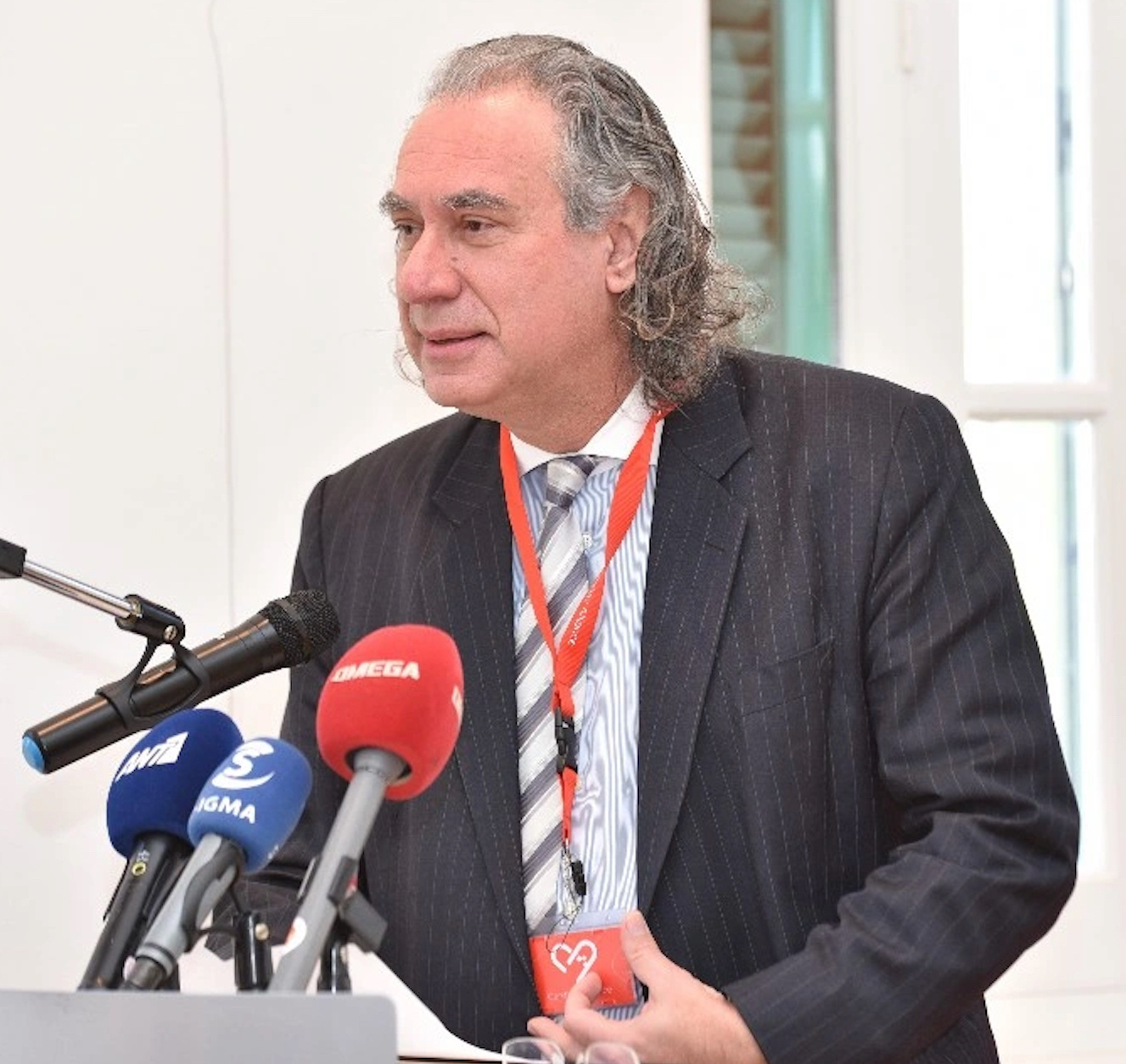
Michalis Papadopoulos
CEO
“When the Problem Isn’t What It Looks Like"
Recent Voices
OR CLICK BELOW TO EXPLORE
or
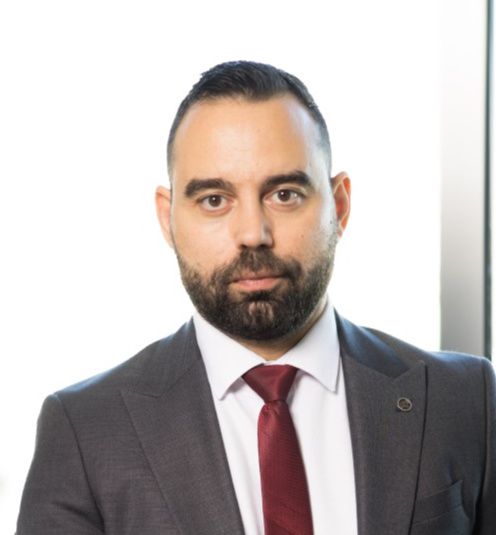
The "Scalable Growth" Voice
The Growth Trap
"Real growth is the increasing ability of a business to absorb complexity without losing clarity, control, or performance." - Lambros Demetriades -
CEO | Growth Strategist | Certified Coach | August 4 2026 · 11 min read
Growth is widely misunderstood.It is often measured as motion, more revenue, more people, more markets, more activity. But motion is not growth. Motion can be noise. It can be momentum without discipline. It can be expansion without improvement.Real growth is something harder. It is the increasing ability of a business to absorb complexity without losing clarity, control, or performance.By that standard, many companies are not truly growing. They are accumulating.They accumulate customers they struggle to retain, people they struggle to align, and decisions they struggle to execute. From the outside, the business looks bigger. Inside, the system becomes more fragile. What appears to be progress is often pressure deferred.For a time, external conditions conceal the weakness. Demand carries inefficiencies. Capital absorbs mistakes. Speed hides structural gaps. Momentum gives the illusion of health.Until complexity catches up.That is the Growth Trap, when expansion moves faster than the organization’s actual ability to carry it.
1. From Foresight to Rigidity - When Vision Stops Updating ItselfFounders often succeed because they see clearly before others do. They move early, decide quickly, and trust their instinct when others are still hesitating.But clarity, over time, can harden.What begins as foresight can slowly become a fixed interpretation of reality. The business evolves, the market changes, the organization becomes more layered, yet decisions continue to pass through the same mental model that worked in the early stage. The very instinct that created the company can begin to limit it.I have seen this in businesses that scaled rapidly on force of conviction. At small scale, speed can compensate for lack of structure. At larger scale, the same behavior creates inconsistency, operational friction, cultural strain, and risk that multiplies faster than leadership realizes.A well known example is the global ride hailing platform that expanded aggressively across markets under a founder celebrated for decisive, instinct driven execution. That style delivered dominance early. But as regulatory pressure, internal culture failures, and operating complexity intensified, the same leadership style stopped being an advantage. The company did not collapse overnight. It simply reached the point where momentum was no longer enough to disguise the cost of how it was being led.The issue is not control itself. The issue is outdated control.Growth requires leaders who can revise their own assumptions continuously. Not because they are weak, but because scale changes the meaning of every decision. The companies that scale best are not the ones where founders vanish. They are the ones where founders stop treating themselves as the final version of the truth.
2. Alongside the Ship - When Ownership Quietly Weakens ExecutionIn family owned businesses, decline rarely arrives dramatically. More often, it arrives gradually and is mistaken for continuity.The pattern is familiar. As the business grows, family members move into operational roles. Sometimes they are capable. Sometimes they are not. Either way, the system adapts around them. Performance may hold for a while, and from the outside little seems wrong. But inside the organization, the cost begins to build.Decisions become slower and more political. Standards become negotiable. Accountability becomes selective. Strong people stop pushing because they realize performance is no longer what determines influence. Eventually, the best people stop staying.The organization does adapt, but not upward. It adapts downward.In contrast, some of the strongest family enterprises in Europe have preserved long term success precisely because they understand the difference between ownership and execution. Family identity remains intact, strategic direction remains intact, but operational leadership is entrusted to professionals who are qualified to run complexity at scale. That is not a rejection of ownership. It is a disciplined expression of it.The difference is not family ownership itself. The difference is role clarity.The most effective family businesses understand that ownership gives responsibility, not automatic suitability for management. They remain alongside the ship, preserving direction and values, without assuming that every family seat must also be a steering position.
3. The Broken Compass - When the Numbers Look Right and Everything Else Is NotMost companies do not suffer from lack of data. They suffer from misplaced attention.
They track what is easy to present, revenue growth, margin movement, top line performance, commercial activity. These figures create confidence because they are visible, repeatable, and easy to celebrate. But they often say very little about whether the business is becoming stronger.
They show movement. They do not always show health.A global flexible office company once reported remarkable revenue growth while locking itself into long term property obligations to satisfy short term market demand. On paper, expansion looked unstoppable. In reality, the cost structure underneath it was becoming progressively more rigid and increasingly unsustainable.The same distortion appears in fast growing ecommerce businesses that scale customer acquisition aggressively while spending more to acquire customers than those customers will ever return in value.The numbers suggest success.
The economics say otherwise.This is the broken compass. Direction is inferred from visible outcomes instead of underlying drivers.What is missing is rarely information. What is missing is the willingness to look where the pressure is actually building. The real indicators of health are usually less flattering and far less comfortable. They sit beneath the headline numbers, in retention quality, in customer lifetime value against acquisition cost, in operational bottlenecks under peak load, in decision latency across the organization, and in the hidden costs growth quietly leaves behind.Complexity cost appears as more coordination, slower decisions, and rising internal friction. Quality cost emerges when customer experience starts deteriorating because scale outpaces control. Talent cost appears when strong people spend their energy compensating for weak systems. Capital cost shows up when money is no longer fueling progress, but merely sustaining inefficiency.These costs do not always live on the dashboard. But they appear everywhere else.Companies rarely fail because they lack growth. More often, they fail because they misread it.
4. The Talent Illusion - Why Hiring Faster Often Means Growing WeakerGrowth creates pressure. Pressure creates urgency. Urgency creates hiring.
Roles are filled quickly. Teams expand. Headcount rises. The organization feels as though it is progressing simply because it is getting larger.But size is not strength.In many businesses, hiring becomes reactive rather than strategic. People are added to absorb pressure, keep pace, and protect momentum. They are not always added to improve capability, sharpen execution, or strengthen the design of the organization. For a time, the system absorbs this. Then the drag begins.Decision making becomes layered. Ownership becomes less clear. Coordination increases. High performers spend less time producing value and more time managing dysfunction. The organization is technically bigger, but operationally weaker.This pattern has been visible in large technology firms that expanded aggressively during high growth periods, only to later cut thousands of roles when it became clear that internal complexity had outgrown real productivity. The issue was not simply over hiring. It was the confusion of capacity with capability.The distinction matters.Capacity can help a business cope with demand. Capability determines whether it can scale without eroding itself in the process.
5. The Strategy Vacuum - When Activity Replaces DirectionThe final trap is difficult to detect because it often looks like ambition.The company is active. It is launching products, entering markets, chasing opportunities, opening conversations, and moving quickly. On the surface, this appears healthy. It looks like a business in motion.But internally, something begins to feel inconsistent. Priorities keep shifting. Teams are stretched across too many fronts. Decisions are made quickly, but not coherently. The organization becomes busy without becoming sharper.That is not agility. It is the absence of a strategic filter.A prominent retail giant once expanded into multiple international markets at speed, prioritizing footprint and visibility over disciplined profitability. Scale was achieved, but so was complexity.Eventually the company was forced to withdraw from several markets and refocus around a narrower, more sustainable model. Expansion had occurred. Improvement had not kept pace.Without a clear strategic filter, growth becomes reactive. The company starts following opportunity instead of defining it. It confuses openness with discipline and movement with progress.
Strategy is not simply what a company chooses to do. It is what it repeatedly refuses to do, even when the opportunity looks attractive.Without that discipline, growth becomes accumulation, not advancement.
The Companies That Scale Best Do Not Chase Growth, They Qualify for ItMost companies do not fail because they grow too slowly. They fail because they grow before they are ready.They expand before the structure can support the volume, before leadership is aligned around the right level of complexity, and before the business has built the managerial and strategic discipline required to carry scale without distortion. Once complexity settles in, correction becomes expensive. Sometimes it becomes politically difficult. Sometimes it becomes impossible.If growth is the ability to perform under increasing complexity, then it cannot be treated as a target alone. It has to be treated as a capability that must be earned.That requires a different operating logic.Before growth, a business must build the right to scale. It must challenge founder assumptions, introduce external perspective where needed, separate ownership from execution when the two begin to blur, and define metrics that reveal real performance rather than only visible success. It must also decide where it will compete and where it will not, because strategic boundaries protect growth just as much as ambition fuels it.During growth, the task is not simply to accelerate. It is to control expansion without losing coherence. That means monitoring hidden costs, complexity, talent strain, capital inefficiency, and decision drag. It means hiring to deepen capability rather than simply absorb workload. It means continually asking a harder question than most organizations ask, whether growth is actually improving performance or quietly degrading it.After growth, the discipline shifts again. The business must simplify what scale made unnecessarily complicated. It must reassess whether the existing leadership model still fits the new reality. It must realign around what is genuinely working, rather than remain emotionally attached to what was merely attempted. And above all, it must institutionalize learning before pursuing the next phase of expansion.Because sustainable growth is not the reward for doing more.*It is the result of becoming able to carry more without breaking what made the business work in the first place.
By Lambros Demetriades for Top 10 C-Suite Voices Global Edition
Editor’s Note:
Some leaders write about growth. Others write about scale. Lambros Demetriades writes about something far more fundamental: the organizational discipline required to earn both.This is not an article about becoming bigger. It is a reflection on why companies often expand faster than they improve, and how complexity quietly outpaces leadership, structure, and execution long before financial results reveal the problem.Drawing on years of executive leadership across commercial operations, supply chain, and business transformation, Lambros challenges one of the most persistent assumptions in business: that growth itself is evidence of success.Lambros' voice reminds us that sustainable growth is never achieved by moving faster, but by becoming capable of carrying more without losing what made the business successful in the first place.
About Lambros Demetriades:
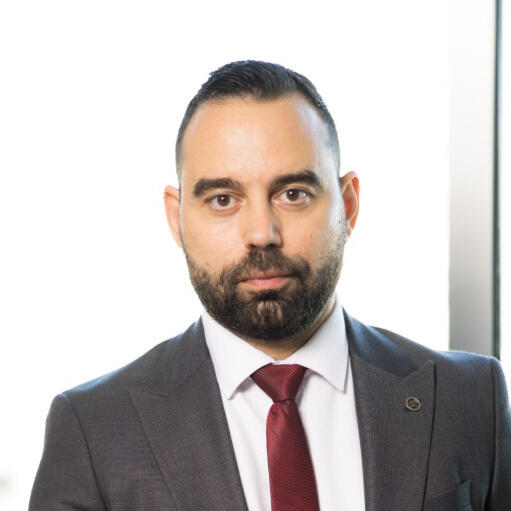
Lambros Demetriades, a visionary CEO who brings an impressive 16+ years of leadership experience across operations, commercial management, and strategic design and implementation. With a career that spans multiple industries, he has cultivated a reputation for driving transformative business growth and operational excellence.Throughout his tenure, Lambros has excelled in high-stakes, C-level roles within esteemed organizations, where he has consistently delivered exceptional results by developing and executing innovative strategies that align with long-term business objectives. His ability to integrate strategic vision with actionable plans has enabled the optimization of operations, increased profitability, and the achievement of sustained success in highly competitive markets.By partnering with Lambros, businesses gain access to a results-driven professional who thrives on solving complex challenges and fostering organizational resilience. He is renowned for his collaborative approach, keen business acumen, and unwavering commitment to achieving measurable outcomes.Whether it’s refining operational processes, identifying growth opportunities, or designing strategies for scalability, Lambros leverages his extensive expertise to empower organizations to realize their full potential. His dedication to excellence and passion for innovation make him a trusted advisor for companies seeking sustainable growth and a competitive edge in today’s dynamic business landscape.
CEO of Axelarate Consulting
or
The Chief Scientist's Voice
How Cyprus Is Turning Its Diaspora Into an Innovation Flywheel
The diaspora is not soft power alone. It is national capability waiting to be activated.
By The Editorial Board | The Top 10 C-Suite Voices with:
Chief Scientist of the Republic of Cyprus | Chair of the National AI Taskforce | Chair of the Board of the Research and Innovation Foundation · July 23, 2026 · 8 min read
This feature was developed by the Editorial Board of The Top 10 C-Suite Voices over several weeks of engagement with the Office of the Chief Scientist. What began as a scheduled interview expanded well past its brief - into follow-up exchanges, written material supplied by the Office, and a review process in which the framing was worked and reworked between us before anything was fixed. The structure and the sequence are editorial decisions. The positions, the figures and the language are the Chief Scientist's own, reviewed and approved by him in full prior to publication.
For decades, Cyprus spoke about its diaspora with pride.It was a story of memory, identity and belonging. A story of Cypriots who left the island, built lives abroad, succeeded in business, science, technology, medicine and finance - and kept Cyprus close to their hearts.But Demetris Skourides, the Chief Scientist of the Republic of Cyprus, sees something more.To him, the diaspora is not only emotional capital. It is not only a cultural bridge. It is not a "soft asset."It is strategic infrastructure.Across Australia, India, the United Arab Emirates, the United States, the United Kingdom, Singapore and other global innovation centres, Cypriots and friends of Cyprus are opening doors that small states rarely access. They are connecting Cyprus with companies, universities, investors, researchers and founders. They are helping turn the country from a small island economy into a serious platform for innovation, AI, technology and applied research.That is the core of what Skourides calls innovation diplomacy.It is diplomacy with measurable outcomes.Not just meetings. Not just speeches. Not just visibility.But companies moving headquarters. Intellectual property coming to Cyprus. Scientists building partnerships. Founders considering Cyprus as a European base. Investors seeing the island not only as a destination, but as a launchpad.And the early numbers suggest that the model is beginning to move from theory to traction.Why do you reject the idea that the diaspora is only a "soft asset"?Because the results are not soft.The Cypriot diaspora is not simply a network of people who remember Cyprus fondly. It includes founders, executives, researchers, investors, policy leaders and operators who have built credibility in some of the most competitive markets in the world.That credibility can become market access.It can become investment.It can become research cooperation.It can become company relocation, IP transfer and jobs.Skourides points to a growing set of examples that show a different kind of diaspora engagement.HUMRN, an Australian human-centred AI company, is relocating its corporate base from Melbourne to Cyprus. Its co-founder and chief executive, David May, has described Cyprus as central to the company's next phase of growth."We're in the process of relocating our corporate head office from Melbourne to Cyprus," May said. "That decision reflects where HUMRN is heading, not just where it started."For May, the decision was not only about access to Europe. It was also about trust, governance, ethics and the ability to build responsibly.Engagement with Skourides, he said, changed how the company viewed Cyprus. What stood out was the seriousness of the national vision being advanced around research, regulation, ethics and real-world application."For us at HUMRN, operating in a sensitive space involving people, data and long-term outcomes, that kind of joined-up thinking matters enormously," May said.That is precisely the type of signal Cyprus wants to send.Not a place where companies simply register. A place where companies can build.ESG Perform Global, connected to Cypriot Australian entrepreneur James Demetriou AM and Professor Danny Samson of the University of Melbourne, represents another kind of opportunity: ESG capability, carbon-credit innovation, headquarters activity, know-how and intellectual property.Its significance is not only that a company is moving closer to Cyprus. It is that the company brings applied knowledge from a more mature market and can help Cyprus participate in a fast-growing global field.THREEDIUM, a Cypriot-founded technology company with global clients including Louis Vuitton, adds another signal. Michael Charalambous Angelides, Co-CEO of THREEDIUM, has described the country's shift clearly:"Cyprus is no longer simply a place to incorporate - it is becoming a place to build, scale, and innovate globally."That sentence captures the new ambition.For years, Cyprus has been seen as a jurisdiction, a services centre, a tourism destination, a place of family roots.The emerging question is different: can Cyprus become a serious base for globally scalable companies?Skourides believes the answer depends on whether the country can activate trust, talent and execution at the same time.What makes this different from traditional diaspora engagement?Traditional diaspora engagement often begins with identity. That matters. But it is not enough.Innovation diplomacy begins with identity and moves quickly to action.Who can open a door? Who can bring a company? Who can connect a university? Who can help a Cypriot founder scale? Who can help attract IP, jobs, investment and know-how? Who can help Cyprus enter markets where small states are usually ignored?That is the difference.In this model, a diaspora leader is not only a guest at a conference. A diaspora leader can become a national growth node.Each member of the Cypriot diaspora has spent years building relationships based on value, credibility, integrity and trust. Some are policy influencers. Others are economic powerhouses. Many are respected operators in industries where Cyprus wants to grow.Their passion is emotional.Their credibility is strategic.Their competitiveness is a national advantage.That is why Skourides rejects the old language.The diaspora is not soft power alone. It is national capability waiting to be activated.Are there measurable signs that this model is working?The early numbers are beginning to tell a serious story.In Australia, six companies have been engaged through this innovation diplomacy effort. Within eight months, two have relocated to Cyprus and two more are considering relocation.From an India perspective, five companies have been engaged. One completed relocation within one month, while three additional companies are considering Cyprus as a base.In the United Arab Emirates, three companies have been engaged and are considering relocation within the next six months.In the United States, eight companies have been engaged since January 2025. Five have already relocated, while one Silicon Valley startup is currently in discussions.Two of these companies have already brought their intellectual property to Cyprus and have started hiring Cypriot talent.Across four major corridors - Australia, India, the UAE and the United States - at least 22 companies have been engaged. Eight have already relocated. Nine others are considering relocation.For a small state, those figures matter.They show that Cyprus is not only being noticed. It is being considered. And in several cases, it is being chosen.The difference between visibility and credibility is conversion.Visibility means people take the meeting. Credibility means they move their company. Strategic trust means they bring IP, hire local talent and build for the long term.That is the point Skourides is trying to make.Diaspora engagement is no longer only about emotional connection. It is becoming a measurable economic channel.How does innovation diplomacy work in practice?Skourides' model is simple: Cyprus must connect deliberately with the world's strongest research and technology countries.Not randomly. Not through disconnected visits. Not through protocol alone.Each country must have a purpose.If Cyprus wants to become stronger in sustainability and energy, it must work with countries that already lead in those sectors. If it wants to become stronger in cybersecurity, it must build relationships with countries that have deep operational and industrial capability. If it wants to grow biotech, medical research and translational science, it must connect with the universities, scientists and companies already producing breakthroughs.In practice, one international mission can serve four objectives at once.First, policy engagement. Second, company attraction. Third, university and research cooperation. Fourth, global positioning of the Cyprus innovation ecosystem.This is the important difference.A normal visit produces photographs. A strategic visit produces a corridor.For Skourides, every trip must answer a practical question: what can this country, company, university, investor or founder help Cyprus build?That is how small countries move faster.They cannot afford slow diplomacy. They cannot afford fragmented outreach. They cannot afford to wait years for opportunities that competitors will capture in months.Speed, in this model, is not impatience.It is strategy.
What did the Australia example prove?Australia showed that the model can work.Skourides' engagement with the Cypriot diaspora there did not stop at community connection. It moved into startups, universities, translational medicine and company relocation.The result was not one conversation. It was a chain reaction.HUMRN entered the Cyprus ecosystem. ESG Perform Global began moving its headquarters and intellectual property. Researchers linked to Monash University opened new possibilities in areas such as cardiac research, multiple sclerosis and translational medicine.This is important because Cyprus does not need to invent everything alone.If another country has world-leading knowledge in a field, Cyprus can build partnerships. It can create consortia. It can connect researchers. It can help turn science into companies, jobs and healthcare impact.That is what innovation diplomacy does at its best.It does not ask: how can Cyprus copy bigger countries?It asks: how can Cyprus connect with excellence, bring part of that excellence home, and build from there?This is a more intelligent model for a small state.Cyprus can be small and still be highly connected. Small and still strategic. Small and still fast. Small and still trusted.Where is Cyprus now on the innovation flywheel?The flywheel has started.It is still early. But the first circles are visible.When international companies look at Cyprus, opportunities are created. When opportunities are created, high-quality talent begins to pay attention. When talent pays attention, companies become more confident. When companies become more confident, investors listen. When investors listen, the ecosystem becomes stronger.That is the flywheel.Visibility creates trust. Trust creates partnerships. Partnerships create investment. Investment creates jobs. Jobs attract talent. Talent attracts more companies. And the cycle begins to accelerate.The company-conversion numbers now give that flywheel more substance.Eight companies relocated across key corridors is not a slogan. It is a signal.Nine more considering relocation is not a guarantee. But it is a pipeline.The IP transfer and hiring activity is even more important. That is where innovation diplomacy becomes economic development.Skourides also points to Tenstorrent as an example of how this dynamic works at the level of talent. When opportunities connected to Cyprus opened, strong Cypriot talent abroad responded - including professionals working in some of the world's leading technology companies.That sends a powerful message.The Cypriot brain drain is not permanent. It can become brain circulation. And eventually, brain return.For years, small countries have worried about losing talent. The more important question now is whether they can build the conditions to bring talent back - directly or indirectly.A high-value technology job does not create only one job. It creates demand around it: housing, services, education, retail, professional support and family life.That is how innovation becomes economic development.Why does this matter for Vision 2035?Vision 2035 is not only about technology.It is about the kind of country Cyprus wants to become.A place to live. A place to work. A place to raise a family. A place to build a company. A place to commercialise research. A place where talent does not have to leave in order to matter.For Skourides, the technology agenda is one part of a wider national transformation. AI, research, innovation, digital infrastructure and startups are not isolated sectors. They are the foundations of future competitiveness.Three priorities stand out.The first is infrastructure.Cyprus needs the right research, digital and AI infrastructure. That means computing capacity, chips, data capability, advanced labs, research centres, funding tools and international partnerships. Without infrastructure, ambition remains a slogan.The second is capability.AI will change every services economy. Cyprus must prepare people - students, workers, civil servants, entrepreneurs, lawyers, accountants, financial professionals and researchers - to use AI safely, productively and responsibly.Some jobs will change. Some roles will disappear. Some people will become more valuable because they learn how to work with intelligent systems.The question is whether Cyprus can prepare fast enough.The third is ecosystem reform.The innovation system must become simpler, faster and more attractive. Researchers must be helped to think beyond publication and toward impact. Startups must be supported to scale. Investors must see Cyprus as credible. Global companies must find it easy to build here.The goal is not to create noise.The goal is to create movement.What could still go wrong?Skourides is clear about the risk.The danger is not lack of talent. It is not lack of ambition. It is not lack of geography.The danger is culture moving too slowly.AI is advancing faster than many institutions can adapt. For Cyprus, the risk is especially serious because the economy depends heavily on services. Financial services, legal services, professional services, tourism, shipping, education and government will all be reshaped by artificial intelligence.If Cyprus moves early, it can become a trusted AI-enabled services economy.If it moves late, it may spend the next decade defending old models while competitors build new ones.That is why this moment matters.The race is not only technological. It is cultural.Can Cyprus move faster? Can institutions collaborate better? Can researchers commercialise more boldly? Can companies adopt AI responsibly? Can the public sector lead by example? Can the diaspora become a permanent innovation network rather than an occasional audience?These are the real questions.Andrea Michaels, the former South Australian minister and member of parliament whose family story is rooted in Cyprus, represents another dimension of this bridge. Her presence in the diaspora conversation reflects how Cyprus's global network is not only commercial, but civic and political. It includes people who understand government, business, law, community and international trust.That combination matters because innovation ecosystems do not grow only through technology. They grow through people who can translate between systems.Between Cyprus and Australia. Between government and business. Between research and market. Between identity and execution.That is the bridge Skourides is trying to turn into a permanent operating model.What is the bigger story?The story of Cyprus today is not that it wants to become another Silicon Valley.That would be the wrong ambition.Cyprus must become the best version of itself: European, trusted, agile, connected, entrepreneurial and human-centred.Its advantage is not scale. Its advantage is speed. Its advantage is trust. Its advantage is its location. Its advantage is its people - at home and abroad.Innovation diplomacy is the method for connecting these advantages.It turns diaspora pride into economic action. It turns international visits into investment corridors. It turns research into partnerships. It turns visibility into credibility. It turns credibility into jobs.For Skourides, this is not abstract policy. It is a national race.A race to build AI capability before disruption arrives. A race to bring talent back before it settles elsewhere. A race to make Cyprus visible before the world's innovation map is redrawn. A race to ensure that Vision 2035 becomes a lived reality, not a strategic document.The message is simple.Small countries do not have to wait for the future.They can engineer it.And Cyprus, through innovation diplomacy, is beginning to show how.
Editorial NoteThe first half of this conversation ran in The Top 10 HR Voices. We said then that the rest would follow here. This is it.The material was split across two verticals for a reason that is not editorial convenience. The two halves ask different questions of different readers. The HR piece dealt with the workforce architecture of the AI transition - the HUMAN+ Model, Reimagine Before You Automate - and it belonged with the people who will have to build it. What you have just read belongs here because, underneath the language of diplomacy and diaspora, it is not a policy story at all. It is a capital allocation story.Strip the framing away and what remains is a ledger. Twenty-two companies engaged across four corridors. Eight relocated. Nine considering. Intellectual property transferred onto the island. Cypriot talent hired against it. Those are not aspirations, they are entries. For any executive deciding where to base a company, where to place research, or where to commit capital over the next thirty-six months, the useful question is not whether Cyprus is ambitious. Every small state is ambitious. The question is whether the flywheel described here is already turning fast enough to be worth joining early, while entry is still cheap and the relationships are still personal.We will add one observation of our own. Most small-state innovation narratives are written in the future tense. This one largely is not, and that is why it earned space across two of our verticals instead of one.There is more of this conversation still unreleased. Demetris Skourides has recorded an episode of NO BRIEF, our unscripted long-form series - no pre-shared questions, no coordination calls, no rehearsed answers - arriving with the first season. Further coverage continues across the Ecosystem's remaining verticals in the weeks ahead.To Mr Skourides, on behalf of the whole Top10Voices - EcoSystem team: our thanks. The throughput coming out of your office is unusual, the reasoning behind it more so, and a great deal of it reaches the people who need it far later than it should. Bringing that forward is precisely what this platform exists to do.For readers who want to follow the wider arc of the Chief Scientist's work directly:🔗 Office of the Chief Scientist of the Republic of Cyprus🔗 LinkedIn🔗 YouTube (keynotes, interviews, public appearances and policy addresses)🔗 InstagramTo the executives, founders and investors reading across Cyprus, Greece and the wider region: this is worth a second read, and worth forwarding to whoever in your organisation owns the next three years.The Editorial Board of The Top10Voices - EcoSystem
About Demetris Skourides:
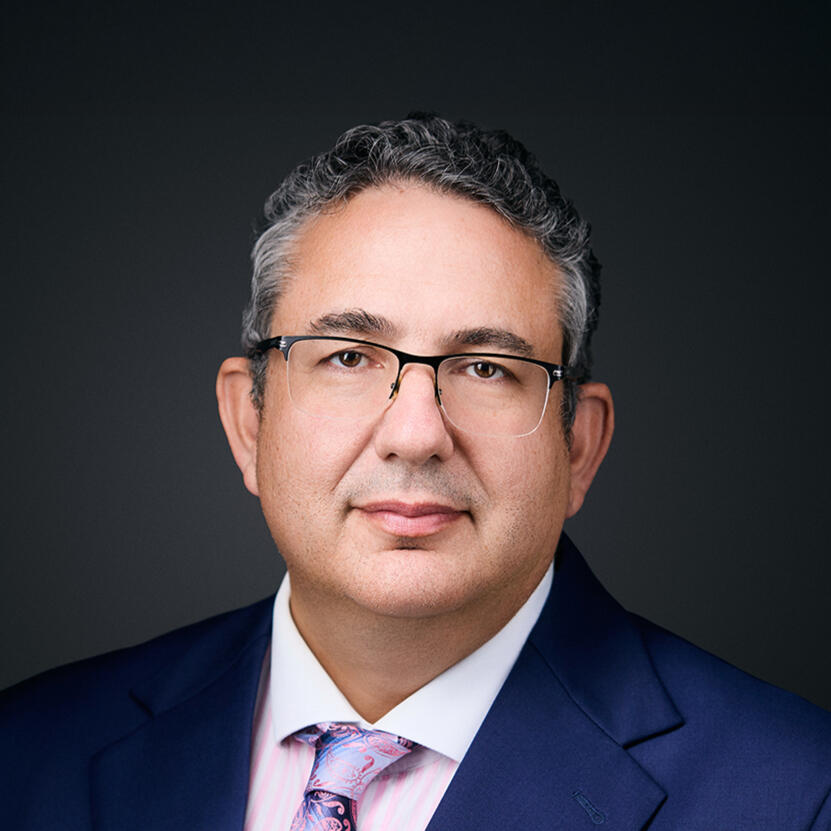
Demetris Skourides is the Chief Scientist of the Republic of Cyprus, appointed in 2023 to lead the country’s strategy in research, innovation, technology, and artificial intelligence.He chairs both the National AI Taskforce and the Board of the Research and Innovation Foundation and represents Cyprus in leading European and global networks on technology policy. Since taking office, Skourides has prioritized industry engagement, holding over 1,100 meetings to map Cyprus’s AI adoption landscape. He actively connects research centres and startups with industry, facilitating proof-of-concept collaborations and guiding policy around digital infrastructure, AI, and emerging technologies.He has accelerated Cyprus’s internationalization, playing a key role in securing MoUs with Japan, Israel, and the UAE, and initiating strategic partnerships with Singapore, the USA, and India.He holds a BSc in Computer Science from Arizona State University and an MBA from Henley Management College, with additional executive training at Columbia, Stanford, MIT, and Harvard. With over 17 years at Oracle and later AWS, he led multi-partner cloud transformation programmes and industry-specific AI strategies across EMEA and APAC. Skourides is committed to positioning Cyprus as a regional hub for AI innovation, startup growth, and technology leadership.
Chief Scientist of the Republic of Cyprus | Chair of the National AI Taskforce | Chair of the Board of the Research and Innovation Foundation
or
The "Business Reinvention" Voice
Building It Twice: What Two Decades and Two Firms Taught Me About Leadership, Cyprus, and Recruitment's Reckoning
"Twenty years taught me how to build a business well. The last two years taught me how to rebuild one when the work itself changes." - Donna Stephenson -
Founder & Principal Recruiter, Emerald Zebra | July 9 2026 · 13 min read
In 2004, I co-founded a recruitment agency in Cyprus with no funding, no client book and an industry that barely existed on the island. We built it into the largest agency in the market. I exited in 2018. Three years later, I started again. Same country. Same industry. Different decision entirely.The first firm was built in the conditions of its time. Volume mattered. Multi-agency briefs were the norm. Speed beat depth. We adapted, scaled, hired, trained and won. By the end I was running a business that placed thousands of people across Cyprus and had become a household name in the local market. I am still proud of it. But by the time I exited, I knew I had built something I wouldn't build again.Recruitment, the way most of the industry still practises it, is a transaction model dressed up as a relationship model. Roles come in. Candidates go out. The metric is fill rate. The unspoken metric is volume of activity. The work that actually matters, understanding the business, the team a candidate is inheriting, the politics they'll walk into, the brief the client hasn't yet articulated to themselves, gets compressed into whatever margin the model allows.I exited in 2018 not because the business had failed. It hadn't. I exited because I had stopped believing in the operating model.When I started Emerald Zebra in 2021 with two employees, I built it around a single question: what would specialist recruitment look like if you removed every incentive that pushes the industry toward shallow work? By 2022 we were four. By 2025 we were six. The firm was working.And then, late 2025, I made a decision that surprised most people who know me. I scaled back. Not because the business was failing. Because the rules of the work had changed, and I refused to pretend they hadn't.The AI shift was the inflection point. Working hands-on with the technology rather than reading about it, it became clear that the tasks that had justified a six-person team were no longer six-person tasks. Pipeline construction, candidate research, longlist assembly, market mapping, screening logic, all of it had been compressed into work that a small, AI-fluent team could do at higher depth and faster turnaround than a larger conventional team. The industry was, and largely still is, in denial about this. I wasn't willing to be.I redefined Emerald Zebra around what the new economics actually rewarded: deep specialist work, exclusive contingency and retained mandates, recruitment and senior search from specialists to heads of department through to C-level and board appointments, and a reach defined by where the work is, not where the real estate sits. A small, AI-fluent team running specialist and senior search from one well-positioned base can serve clients across multiple geographies with deeper market knowledge than a regional office staffed by consultants carrying ten roles each. We now run mandates across Cyprus, the UAE, Singapore, and Malaysia from Limassol. The depth of work per mandate is the highest it has ever been in either firm I've built.The shift hasn't only hit agencies. Clients now have most of the same tools we do, and many have built internal talent acquisition teams to do their own headhunting. The ethical guardrails the industry used to take for granted have quietly collapsed. Twenty years ago, most clients gave us a non-poach list. That principle held, both ways, and it was part of what made specialist recruitment a profession rather than a free-for-all. Today the same clients run internal TA teams who approach whoever they like, often without the market depth to know whether the people they're approaching are even relevant. It used to feel meaningful to be headhunted. Today everyone is being headhunted, and most of it is noise. The industry has lost something in that shift that nobody is talking about: the relational discipline that made the work matter.What twenty years between the two firms, and the two chapters within the second one, taught me sits in three observations.The first: the recruitment industry's fee model is the single biggest obstacle to doing the work well. Most agencies operate on contingency, paid only when they place. Every hour spent on a search that doesn't end in a hire is unpaid. Every client who decides none of the candidates are right, who pauses the role, or who simply changes their mind, costs the recruiter the entire fee. Worse still is the multi-agency brief, the same role sent to four or five firms with the placement going to whoever moves fastest. The economics force every agency to skim the surface and compete on speed rather than fit. The client thinks they're maximising their chances. They're actually guaranteeing shallow work from everyone they've briefed. Exclusivity changes the maths entirely. When a firm is the only one running the search, the incentive flips from speed to depth, from volume to judgement, from closing to getting it right. Until a firm is willing to work only exclusive mandates or charge for the work and not for the outcome, the structure itself will keep producing the shallow, transactional service the industry then complains about.The second: I learned the hard way that you cannot build something that requires conviction inside a structure that requires consensus. My first firm was a co-founded business. Two founders, two visions, and for most of the early years that tension was generative. But over time the two visions diverged, and the management style that had worked at the start stopped working at the scale we'd reached. By the end, decisions that needed conviction were being made by compromise. I don't think either of us was wrong. We just wanted different things from the same business. When I started Emerald Zebra in 2021, the single most important structural decision I made was to build it alone. Not because I think solo founders are better, plenty of the best businesses I know are partnerships. But because the work I wanted to do required the ability to make a call quickly, change direction when the market changed, and hold a standard that wouldn't survive a second opinion's slow erosion. Autonomy isn't ego. It's the structural condition that lets conviction-led work happen. The lesson twenty years gave me is that the shape of the ownership determines the shape of the work, more than most founders are willing to admit when they're choosing their co-founder.The third, and the one I sit with most: the work I've been doing for twenty years has been redefined underneath me, twice, and the second time was last year. AI has changed what specialist recruitment actually is, and it has hit both sides of the market at the same time. A lot of the work that used to fill a recruiter's day can now be done in a fraction of the time with the right tools. But clients have those same tools too, and many of them have absorbed the volume work in-house, running their own sourcing, their own pipelines, their own first-pass screening through internal TA teams. What they come to agencies for now is the harder end of the market: the roles their internal teams can't fill, the searches that need depth they don't have, the hires where judgement and reach through networks matters more. That part of the job has been compressed, hard, and at the same time the bar for what's left has gone up. What remains is the work that always mattered most: reading a brief properly, knowing the market, making the call on who goes on a shortlist and who doesn't, and being honest with both clients and candidates when honesty is what the moment calls for. That work is now the whole job, not the senior layer of it. Scaling back in late 2025 was the hardest commercial decision I have made. It looked, from the outside, like a retreat. From the inside, it was a refusal to build a business whose core work was about to be commoditised. I chose to build a smaller firm doing deeper work, because deeper work is what the new market actually pays for.The lesson I would offer to anyone considering a hard reset inside their own business is this: the discomfort you feel running an organisation that no longer matches the realities of its market is information. Don't manage around it. Don't optimise it. Don't reframe it. The cost of changing is real and immediate. The cost of refusing to change is invisible and far more expensive.I built it twice. The first time, I built what the industry asked for. The second time, I built what I believed the work required. And the second time, when the work changed again, I rebuilt without flinching. That third move, the late-2025 reset, is the one I am proudest of.Twenty years taught me how to build a business well. The last two years taught me how to rebuild one when the work itself changes.
By Donna Stephenson for Top 10 C-Suite Voices Global Edition
Editor’s Note:
Some leaders write about growth. Others write about disruption. Donna Stephenson writes about something far rarer: the courage to deliberately rebuild a successful business when success itself becomes outdated.This is not a reflection on recruitment. It is a reflection on strategic conviction, technological disruption, and the difficult decisions leaders must make when the market rewrites the rules beneath them.In a business world increasingly shaped by AI, few perspectives are as valuable as those grounded in lived experience rather than theory.Donna's voice is one of those perspectives.
About Donna Stephenson:

Donna Stephenson is the Founder and Principal Recruiter of Emerald Zebra, a specialist recruitment consultancy based in Limassol, Cyprus, serving FinTech, Financial Services, FX/CFDs, Crypto, Tech, iGaming, and RegTech clients across Cyprus, EMEA and APAC.With over two decades in the Cyprus recruitment market, Donna brings a depth of network, sector fluency, and judgement that few in the region can match. She previously co-founded and led one of the island’s leading recruitment agencies, exiting via share sale in 2018, and founded Emerald Zebra in 2021 to focus on the regulated, fast-moving industries shaping Cyprus’s financial services future. She now leads search and specialist mandates across Cyprus, Dubai, Singapore, and Southeast Asia.Donna is a recognised voice on hiring, workforce trends, and the evolution of Cyprus as a regional financial and tech hub, and a frequent speaker and panellist across the FX, Crypto, and FinTech industry. Originally from the UK, she has lived in Cyprus for over twenty years.
Founder & Principal Recruiter, Emerald Zebra
or
The "Human-Centered" Leadership Voice
Why modern leadership requires emotional clarity, not just strategic intelligence
"Modern leadership will not require less intelligence. It will require leaders who understand that intelligence without emotional clarity eventually becomes limiting—not because people stop admiring them, but because people stop trusting them." - Elena Krutova -
Chief Operations Officer at Voiso | Honorary Editorial Chair of "The Top10Voices - EcoSystem" |
June 18 2026 · 6 min read
Who is a real leader for you: the one who knows everything and speaks louder than others, or the one who listens to others, connects the dots and cares about team integrity?Well-well, some people may argue that it is better to work for a decisive and sharp person than for a caring corporate animal. I would not be so sure - in reality, many organizations today suffer not from poor strategy, but from emotionally disconnected leadership and systemic issues in the ways how the organisations function.Let’s avoid talking about another “EQ matters” cliche and instead explore the tension leaders actually live with:
• pressure vs humanity
• certainty vs vulnerability
• performance vs emotional honesty
• speed vs reflectionModern leadership no longer fails primarily because leaders lack intelligence, it fails because leaders lack emotional capabilities and sensitivity.
The smartest person in the room is often the least emotionally clearFor decades, leadership rewarded certainty, speed, and analytical dominance. The best leader was expected to be the smartest person in the room: sharp thinking, decisive answers, strong control. Intelligence became authority, and usually a very unpleasant (and unproductive) one.That model still works in stable environments, but most organizations no longer operate in stable environments. Today’s leaders manage constant change, emotional fatigue, uncertainty, hybrid work, cultural tension, and continuous transformation. In that environment, strategic intelligence alone is no longer enough.“Give me a reason to continue when I am completely lost” - here is the unspoken question, each leader has to deal with. Because leadership is not only cognitive, but also emotional - the ability to understand what is REALLY going on and tackle it.A leader’s mood scales faster than strategyMy manager will lose my trust not because they lack clear strategy or industry intelligence, but because they create chaos in my mind and soul without giving emotional support to go through the daily hardships of the work.And believe me, I am not from the weakest ones.
Being smart or being human sensitive? Both!Intellectual intelligence and emotional clarity are not the same capability. In some cases, they even develop in opposite directions. Why so?Highly analytical people are often rewarded early in life for being correct, fast, and rational. Over time, they learn to suppress discomfort, push through exhaustion, and rely heavily on logic. That approach builds performance. It also creates blind spots.A leader can understand markets, operations, and strategy with exceptional precision while remaining disconnected from their own emotional patterns.The smartest person in the room is often the least emotionally clear because intelligence can create the illusion of self-awareness. The ability to explain rationally your behavior is not the same as understanding yourself.
Silence is the most dangerous enemy of any leaderPeople experience leadership emotionally before they experience it strategically. A leader may present an excellent strategy. But if the team senses fear, defensiveness, ego, or emotional inconsistency, trust weakens immediately.The problem is rarely visible on a PowerPoint slide, but it shows up in silence, disengagement, hesitation, and lack of honesty. This is where emotional clarity becomes critical and it is not emotional oversharing. It is also not performative vulnerability or endless conversations about feelings. It is the ability to understand how you act and think while under pressure and prevent that state from unconsciously shaping your behavior.Emotional clarity is not about “bringing your whole self to work.”
It is about bringing a regulated and conscious self to work.Consider a common leadership moment: critical feedback. An intellectually strong executive may say all the right things:“I appreciate the feedback.”
“Good point.”
“Let’s discuss it openly.”But emotionally, their team members may feel threatened, exposed, or challenged. Without emotional clarity, those reactions leak into behavior. If the leader interrupts more often, defends decisions too quickly, we all tend to withdraw, become colder, and stop inviting dissent.The team notices immediately. We stop caring. This is how psychological safety disappears - not through dramatic behavior, but through accumulated emotional signals.
Why is it even important?Emotional competence matters more now because modern organizations are emotionally overloaded. Employees carry uncertainty, burnout, change fatigue, and pressure long before they enter a meeting room. Leaders absorb the same pressures while also carrying responsibility for performance, direction, and stability.The emotional load inside organizations has increased significantly. Yet many leadership cultures still reward emotional suppression as professionalism.That is outdated! Emotional suppression is not emotional strength.The leaders who create resilient organizations today are not necessarily the most charismatic or intellectually dominant. They are often the clearest! They regulate themselves under pressure. They do not panic publicly or collapse privately. They can absorb tension without transferring it to everyone else. And that stability creates trust, and trust creates execution.Strategy still matters, of course. Poor strategy destroys organizations. But in many companies, strategy is not the real problem anymore - emotional incoherence is. See the inconsistency and even mendacity:Leaders speak about transformation while teams feel exhaustion.
They speak about resilience while employees experience fear.
They speak about values while behaving defensively under pressure.People notice the gap immediately. Employees rarely resist strategy itself. They resist emotional inconsistency.
And what about the future of leadership? Will AI remove a human part of it?The future of leadership will likely make this even more important. Artificial intelligence is rapidly improving analytical capability. Information, forecasting, and strategic synthesis are becoming more accessible to everyone.
What remains deeply human is emotional judgment:
• The ability to stay clear under pressure.
• The ability to regulate fear without denying reality.
• The ability to create trust during uncertainty.
• The ability to listen without becoming defensive.Those are not soft skills anymore. They are operational leadership skills.Modern leadership will not require less intelligence. It will require leaders who understand that intelligence without emotional clarity eventually becomes limiting - not because people stop admiring them, but because people stop trusting them.
So, look at the mirror and check - will you be the one leading the future!
By Elena Krutova for Top 10 C-Suite Voices Global Edition
Editor’s Note:
There is a noticeable difference between leaders who speak about people and leaders who genuinely understand people.Throughout her career, Elena Krutova has operated at the intersection of transformation, operational excellence, and human leadership, leading complex organizations through growth, uncertainty, restructuring, and change across multiple industries and international environments.What makes this contribution particularly relevant is that it challenges one of the most persistent assumptions in modern business: that leadership is primarily an intellectual exercise.As artificial intelligence continues to democratize access to information, analysis, and strategic insight, the differentiator for future leaders may no longer be who knows the most, but who remains the clearest under pressure, the most consistent during uncertainty, and the most trusted when difficult decisions must be made.In this article, Elena reminds us that emotional clarity is not a soft skill. It is leadership infrastructure.Her perspective reflects not only the insights of a Chief Operating Officer, former Chief People Officer, and Board Director, but also someone who has spent more than two decades helping organizations navigate the human realities behind performance, transformation, and growth.It is for these reasons that we are proud to have Elena Krutova serve as an Honorary Editorial Chair of "The Top10Voices - EcoSystem".The future of leadership will undoubtedly require intelligence.But as Elena compellingly argues, it will increasingly belong to those who can combine intelligence with humanity, discipline with empathy, and performance with trust.
About Elena Krutova:
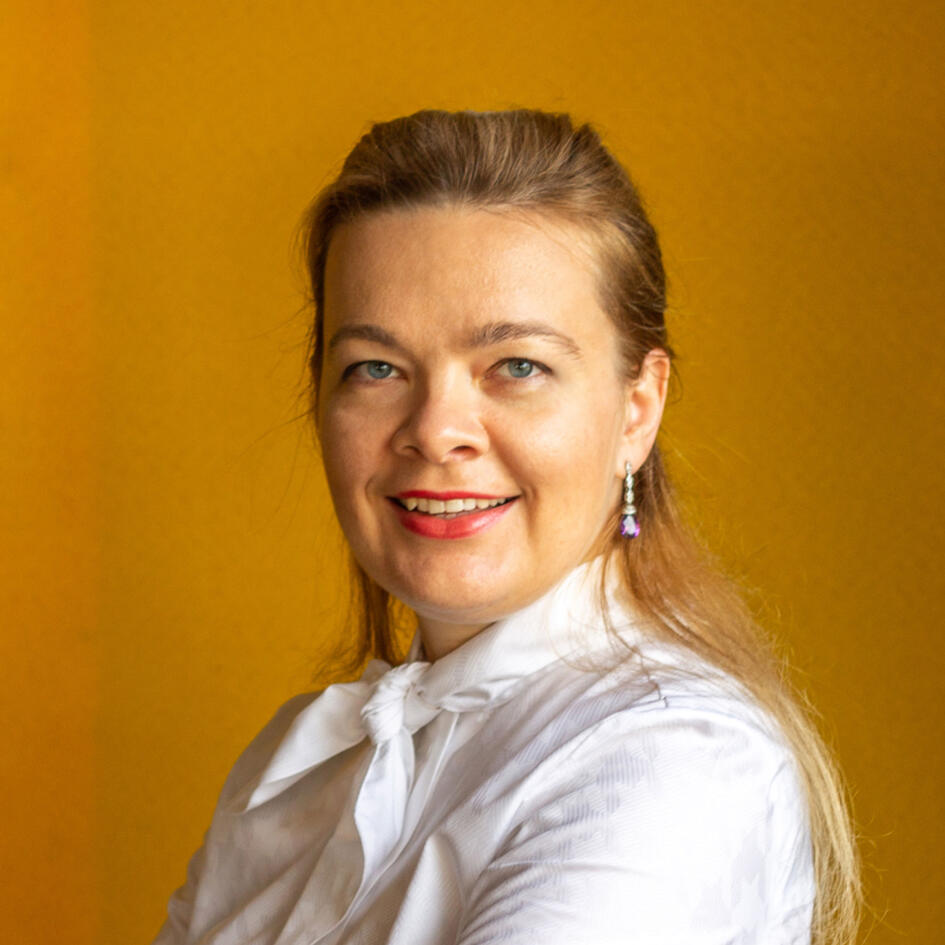
Elena Krutova is a senior executive with more than 20 years of international experience in HR, operations, and corporate management. Throughout her career, she has held numerous C-level and leadership positions in global organizations across Russia and Cyprus, including Kaspersky, IBM, Bureau Veritas, Exness, and Remedica.Elena holds a Master of Science degree in International Human Resources Management from Kingston University and completed the Executive Master in Change program at INSEAD in 2023.In her current role as Chief Operations Officer at Voiso, Elena oversees all back-office functions, including HR, Finance, Legal, Compliance, and Office Operations, while also serving as a member of the company’s Board of Directors.Her professional interests include organizational transformation, leadership development, operational excellence, employee experience, and building high-performing international teams.
Chief Operations Officer at Voiso | Honorary Editorial Chair of "The Top10Voices - EcoSystem"
or
The Navigator’s Voice
Culture Is the Real Global Strategy
“Because it is impossible to truly understand a market without understanding its culture and ecosystem from inside.” - Ilya Gutov -
CEO at Meridian Play | Mentor at Orbit Startups | TEDx Speaker | May 29 2026 · 5 min read
The gaming industry is still surrounded by stereotypes and misconceptions, both negative and positive. Yet games have already become part of everyday life for billions of people, shaping culture, technology, communication, and how audiences interact online. Gaming is no longer a niche industry. It has become part of modern digital culture and global entertainment infrastructure.My journey started in a city where entering the gaming industry felt almost impossible. At the same time, the rise of mobile internet, app stores, and the first wave of the APAC digital boom created entirely new opportunities. What started as curiosity became a 15-year career across the gaming industry in Asia.From the very beginning, I focused on one of the most complex markets in the world. I quickly realized that the biggest challenge for international companies was rarely the product itself, but the misunderstanding of local markets, culture, consumer behavior, and economic reality. Many entertainment companies pursued expansion through product-market fit alone, while underestimating how differently ecosystems actually operate. In many cases, this gap became the main reason projects failed or were overtaken by competitors who understood the region better.At that point, I had just graduated and knew I wanted to work in gaming. I also understood that the environment I came from was still far from international. But I had already spent time in China due to my interest in regional economics and development. Because of that, building connections across China and Asia became a natural and immediate direction.Timing also played a critical role. It was the beginning of a new digital era, when mobile gaming ecosystems, platforms, and distribution models were expanding rapidly across Asia. I had the opportunity to observe, learn, and study how these ecosystems functioned from within. Back then, everything felt new, ambitious, and fast-moving. Like many early-career professionals, I believed many relationships would last forever. Experience later teaches you that business, friendships, and partnerships evolve in very different ways over time.Over the years, moving between corporate roles and cross-border business gave me a clearer perspective on how Eastern and Western markets operate differently. Living in Asia long enough changes your perspective completely. You become an expat between cultures — never fully local, but no longer thinking from the perspective of where you originally came from.After more than a decade abroad, your way of thinking changes naturally. The way you understand relationships, communication, trust, business behavior, and even daily interactions becomes different. In many ways, you stop belonging entirely to one environment. That position comes with both advantages and disadvantages, but it also creates a deeper ability to understand how cultures shape entertainment, technology, and collaboration.Cross-border gaming is not only about deals, publishing, or expansion. It is about understanding culture, regulation, consumer behavior, and digital ecosystems, and then adapting products for entirely different audiences. Every market has its own cultural background, entertainment references, digital habits, and expectations around games, music, video content, and social interaction.At the same time, the long-term ambition for most companies remains the same — building globally relevant products. But global products cannot be built from a single cultural lens. This is why people with real cross-border experience become disproportionately valuable. I value that experience more than titles, prestige, or academic background.People who have lived across countries, studied in different systems, and built careers in multiple regions develop a more accurate understanding of how global markets actually function. They learn how to adapt, communicate across cultures, and recognize patterns that are invisible to those operating within a single environment.Because in the end, it is impossible to truly understand a market without understanding its culture and ecosystem from inside.
By Ilya Gutov for Top 10 C-Suite Voices Global Edition
Editor’s Note:
Gaming is no longer an industry defined by entertainment alone. It is an infrastructure layer of modern digital culture, shaping behavior, economies, communication systems, and global attention flows.Yet despite its scale, most companies still fail in one critical area: understanding how deeply local ecosystems define global success.We selected Ilya Gutov because his work sits exactly at that inflection point.Unlike traditional executives who approach expansion through frameworks and theory, Ilya’s perspective is built through operational reality across Asia’s most complex gaming markets. His experience spans regulatory licensing in China, cross-border publishing deals, and strategic market entry across APAC and Western ecosystems — where execution is constrained not by ambition, but by cultural and systemic misunderstanding.What makes his voice particularly relevant today is not just experience, but pattern recognition across markets that rarely translate cleanly into each other. His TEDx contribution further reinforces this positioning: gaming as a cultural and behavioral system rather than a product category.For readers, this feature is not about gaming as an industry.It is about what happens when globalization stops being theoretical and becomes operational.Ilya represents a class of operators who understand that scaling globally is not a matter of expansion, it is a matter of translation between ecosystems.That is the conversation this platform exists to surface.
About Ilya Gutov:
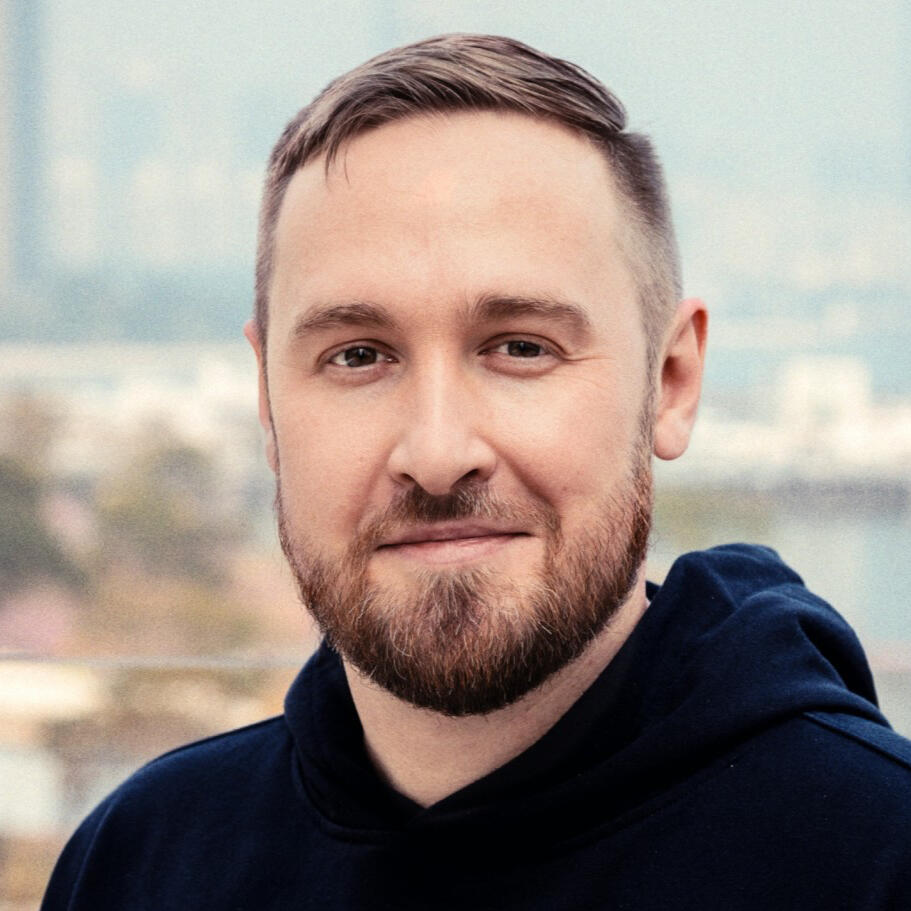
Ilya Gutov is the CEO and Founder of Meridian Play, a gaming advisory and accelerator focused on cross-border partnerships between Asia and Western markets.
With over a decade of experience across the APAC gaming industry, he has built his career at the intersection of market expansion, publishing strategy, and regulatory execution in some of the world’s most complex gaming ecosystems. He previously held senior leadership roles at MY.GAMES and Tinno Mobile, where he led Asia business development, established regional operations, and supported the international scaling of multiple gaming titles across China and APAC markets.Across his career, he has worked on 50+ publishing deals, secured multiple Chinese game licenses (ISBNs), and supported fundraising rounds across Pre-A and Series A stages for gaming companies expanding into Asia. His work spans deal structuring, IP evaluation, market entry strategy, and long-term publisher partnerships across highly regulated environments.He is a TEDx speaker and a mentor at Orbit Startups, and today advises studios and publishers on Asia market entry, global publishing strategy, and sustainable cross-border growth. Through Meridian Play, he helps gaming companies navigate the operational, cultural, and regulatory complexity of building globally scalable game IP.
CEO at Meridian Play | Mentor at Orbit Startups | TEDx Speaker
or
The Operator’s Voice
Why Most CFOs Fail at Driving Performance - and What Actually Works
“I realised I had to change my mindset. I had to think like a strategic finance professional, not like a Big 4 audit manager.” - Charis Eleftheriou -
Regional Operational Director at Baker Tilly South East Europe | May 15 2026 · 7 min read
When I first became a CFO in the medical sector, supporting a healthcare provider operating within the GESY framework, I believed that if the numbers were correct and the reports were delivered on time, my job was done.I was wrong.The reports were accurate, IFRS-compliant, and always delivered on time, but they did not improve performance. In reality, those were among the least important parts of the role.Performance was unstable, decisions were slow, and problems were identified too late. The Board was paying for a CFO, not simply for an IFRS expert.The business looked under control. In reality, it was not.I realised I had to change my mindset. I had to think like a strategic finance professional, not like a Big 4 audit manager.That transition was not easy. Only a few weeks earlier, I had been leading audits.This is where many CFOs get trapped: they resist change.
We often think that reporting performance is the same as driving performance.It is not.I decided that my role was to act as the company’s strategic financial advisor and to take real ownership of financial decision-making.That shift changed everything.The Problem
Reports showed me what had already happened.
By the time a problem appeared in the numbers, it was already too late.
In many organisations, the process is the same:
• Monthly reviews
• Variance explanations
• Discussions after the factIn this model, the CFO becomes reactive, dealing with issues only after they have already affected the business, instead of preventing them earlier.What I Actually Did
Performance is not driven monthly. I learned that it is driven daily.
The moment I changed this mindset, everything improved.
Here is what works for me.1. Daily Visibility - Not Monthly Reports
I cannot manage a business once a month.
I need to see what is happening every day.In practice:
• I review sales daily
• I review the next day’s appointments daily
• I monitor key employees’ performance dailyAt the same time:
• Accounting entries are recorded promptly
• Budget versus actual performance is reviewed weekly
• Corrective action is taken immediately when actual results fall below budgetOnce I started monitoring performance daily, I immediately saw the impact on cash.
There were no surprises at month-end. I was in control, and the Board was as well.2. Rolling Cash Flow Forecasting Drives Control
A rolling cash flow forecast is a living tool. It reflects reality and must be updated continuously based on actual results.Profit is important, but cash determines sustainability.I always maintain visibility on:
• Current liquidity position
• Expected cash flow over the coming days, weeks, and monthsThis is not a static exercise. It is an ongoing process.In reality, most CFOs have faced moments of pressure:
• Struggling to meet upcoming tax or social insurance deadlines
• Delaying supplier payments after payroll has been executedThese situations do not happen by accident.
They are the result of limited visibility and delayed action.
A disciplined cash flow process helps prevent this.
It ensures that obligations are anticipated, planned, and managed - not dealt with under pressure.3. I Plan Beyond the Short Term
Most businesses focus on the next month or the next year.
I do not.
I believe every CFO should plan at least five years ahead.Because one thing is certain. The economy moves in cycles, and financial pressure will come. It is not a question of if, but when.The real questions I ask are:
• Do I have at least three months of operating expenses covered?
• If not, what am I doing today to fix that?
• Will I need to replace key assets in the coming years?
• Have I planned the investment required for those assets?
• Do I have the cash or financing ready for prepayments?
• Can the business absorb downtime or loss of income during replacement?These are not theoretical questions.
They define whether a business can withstand pressure or struggles under it.
Planning ahead gives me control.
Waiting creates risk.4. I Build Real Relationships with Banks
Numbers alone have never been enough to secure financing.
What matters is trust.I focus on:
• Clear and honest communication
• Consistency in meeting obligations over time
• Transparency in both strong and difficult periodsBecause of this approach, I was able to secure several million in financing with limited collateral, as well as favourable overdraft terms.
This was not just a financial outcome.
It was the result of trust.5. I Drive Accountability Through Colleague Involvement
I did not want to lead a business with strong budgets but weak ownership and poor follow-through.
For me, performance improves when people are genuinely involved in the process.
I focus on open discussions and give people space to speak.I ask my team:
• What challenges do you face every day?
• What do you recommend to address these challenges?
• How can we improve this?These conversations create:
• Clarity
• OwnershipThey also challenge colleagues to think differently.
People do not just execute tasks. They understand the impact of their work and contribute to better decisions. They are heard.
My role is not to impose solutions.My role is to:
• Listen
• Challenge
v GuideTogether, we build processes that are practical and effective for everyone.
That is how accountability is created - not through pressure, but through involvement.My Role as a CFO
I do not see my role as simply reporting numbers.
I see my role as a strategic financial advisor, driving performance and supporting the Board of Directors in key decisions.I have been able to advise on critical matters, including:
• Feasibility studies for the acquisition of key assets such as medical equipment and digital systems
• Expansion into new locations
• Tax reorganisations
• Securing new bank financing
• Contract renegotiationsThis is where I create value.
Not by explaining what happened, but by helping guide what should happen next.Final Thought
I do not believe finance drives performance through reports alone.I believe it drives performance through:
• Daily visibility
• Cash control
• Long-term planning
• People involvement and accountability
• Strong relationshipsWhen these are in place, results follow.Without them, even the best reports mean very little.What I monitor and act on daily is what ultimately drives the numbers.
By Charis Eleftheriou for Top 10 C-Suite Voices Global Edition
Editor’s Note:
What makes this piece particularly relevant is that it does not come from theory, branding, or leadership performance theatre. It comes from operational responsibility.Charis Eleftheriou brings a perspective shaped across audit, financial leadership, and now regional operational oversight across multiple markets - where performance is not measured by how reports look at month-end, but by how early problems are identified, how effectively cash is controlled, and how consistently decisions hold under pressure.At a time when many organisations still confuse reporting with performance management, this voice offers something increasingly rare: operational discipline, financial realism, and accountability grounded in execution rather than presentation.That is precisely why we felt this perspective deserved a place within Top 10 C-Suite Voices* Part of The Top 10 Voices - EcoSystem.
About Charis Eleftheriou:
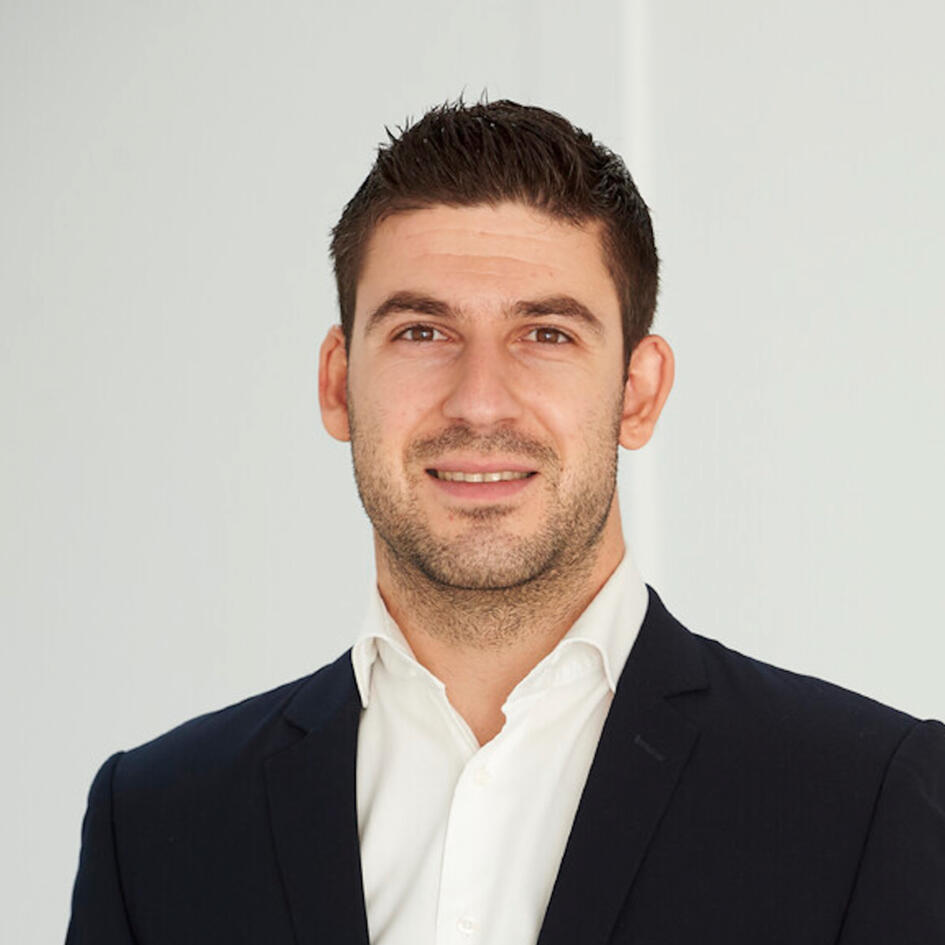
Charis Eleftheriou is Regional Operational Director at Baker Tilly South East Europe, part of the MHA Group. He previously served as CFO in the medical sector, supporting a healthcare provider operating within the GESY framework. A qualified FCCA member with a background in audit at KPMG Cyprus, he brings over a decade of experience across financial leadership and operations.He specialises in driving performance through financial strategy, cash flow management, and operational discipline, while acting as a trusted advisor to Boards on financing, investments, and business expansion.
Regional Operational Director at Baker Tilly South East Europe
or
The "Diasporas" Voice
The Global Cypriot Advantage: Why Diaspora Engagement Is the Country’s Next Growth Frontier
“The true power of a country may lie not only within its territory, but within the reach of its people.” -Paul Lambis-
Founder and CEO, Cyprus Diaspora Forum, Marketing Strategist, Brand Developer, Business Development Manager, Screenwriter, Director, Author, Journalist | April 2026 · 7 min read
In an era defined by global mobility, cross-border collaboration, and the rapid exchange of ideas, nations are increasingly measured not only by what happens within their borders but by the reach and influence of their people around the world. Few understand this more clearly than Paul Lambis, the Founder and CEO of the Cyprus Diaspora Forum — an initiative that has rapidly evolved into one of the most strategically significant international gatherings connected to Cyprus.From 6 to 9 May 2026, the Forum returns to Limassol for its third edition, building on the momentum of previous years while expanding both its scale and ambition. Yet to describe the event merely as a conference would miss the essence of what Lambis set out to create. The Forum is, in many ways, a structural response to globalisation — a deliberate effort to convert identity into influence and heritage into measurable economic and strategic opportunity.Speaking about the origins of the initiative, Lambis describes a moment of recognition rather than inspiration. For years, he observed the remarkable achievements of Cypriots across the world — entrepreneurs leading multinational companies, scientists shaping research frontiers, creatives redefining industries, and professionals occupying positions of influence in global institutions. The diaspora was thriving, but its relationship with Cyprus remained fragmented, often sentimental rather than strategic.“The realisation was simple,” he explains. “We had this extraordinary global network of talent, experience, and influence — but no structured platform to bring it together in a way that actively contributes to national development. I didn’t want to create another event that celebrates heritage. I wanted to create a mechanism that mobilises it.”That distinction lies at the heart of the Forum’s design. Rather than positioning the diaspora as a distant community connected primarily through culture, the initiative reframes it as a strategic growth engine — a distributed network capable of accelerating investment, innovation, and international positioning. The premise is both practical and ambitious: a small country can dramatically extend its economic and geopolitical reach by activating the global presence of its people.For Lambis, this is not theoretical. He sees diaspora engagement as one of the defining competitive advantages of modern nations. Countries that successfully integrate their global citizens into economic planning, knowledge transfer, and innovation ecosystems multiply their capacity for growth. They gain access to international markets, attract new forms of capital, strengthen diplomatic relationships, and cultivate cross-border collaboration in emerging industries.“The diaspora is not an extension of the country,” he says. “It is part of its operating system. When you connect global expertise back into national strategy, you expand what the country can achieve.”This philosophy shapes every aspect of the Forum’s structure. Aside from the social and relationship-building component that naturally comes from bringing together global leaders, innovators, and professionals, participants move through a dense landscape of conversations, partnerships, and strategic engagement that spans the sectors driving contemporary economic transformation — artificial intelligence, financial technology, research and innovation, medical and health sciences, energy transition, digital content creation, education, and advanced scientific development. A strong emphasis is placed on cultivating innovation ecosystems by supporting startups and empowering small and medium-sized enterprises, recognising their critical role as engines of agility, job creation, and long-term economic resilience. Global investors explore opportunities to establish operations, fund emerging ventures, or form strategic partnerships with high-growth companies. Entrepreneurs gain exposure to international markets, mentorship, and capital networks. Policymakers engage with experts whose careers have unfolded across multiple regulatory and economic environments, helping to shape frameworks that enable innovation to thrive. Returning professionals assess pathways to reintegrate into the national economy, contributing knowledge, research capability, and entrepreneurial experience that can accelerate Cyprus’ transition into a competitive hub for innovation-led growth.Repatriation is a particularly important dimension of this ecosystem. For decades, many of Cyprus’ most talented individuals have built careers abroad, drawn by opportunity, scale, and global exposure. The challenge now is not simply encouraging them to return physically but creating meaningful frameworks through which their expertise can contribute — whether through relocation, investment, advisory roles, or institutional collaboration. The Forum works closely with initiatives such as the Cyprus Government’s Minds in Cyprus initiative, which aims to make the return of highly skilled professionals both viable and impactful.Lambis views this process as essential to national renewal. Talent mobility, he argues, should be cyclical rather than one-directional. Individuals gain knowledge abroad and reinvest it at home, strengthening local industries while maintaining international connectivity. The result is not isolation but integration — a national economy deeply embedded in global systems.The Forum also situates Cyprus within broader geopolitical and economic frameworks. Its discussions frequently address the country’s role within the European Union and examine the potential implications of joining the Schengen Area — developments that could reshape mobility, investment flows, and regional positioning. These conversations underscore a recurring theme: Cyprus is not simply adapting to global change but actively seeking to define its place within it.This forward-looking orientation reflects Lambis’ long-term vision for the country itself. He does not describe Cyprus merely as a destination for investment or relocation, but as what he calls a “connector state” — a nation that leverages geography, culture, and international networks to operate far beyond the limitations of size. Positioned at the crossroads of Europe, the Middle East, and Africa, Cyprus has the structural potential to function as a hub for commerce, innovation, education, and cultural exchange. Realising that potential, however, requires sustained openness to global collaboration and a willingness to engage its diaspora not as observers but as partners.“Size is no longer the defining constraint it once was,” Lambis says. “Connectivity is what matters. Influence flows through networks — and Cyprus has one of the most powerful global networks available to any nation its size. The question is whether we choose to activate it.”The Forum itself has become one of the primary mechanisms through which that activation occurs. Previous editions have drawn thousands of participants from across Europe, the Middle East, Africa, Asia, Australia, and North America. Many arrive initially out of curiosity or cultural connection, but leave with business partnerships, investment commitments, or collaborative projects already underway. The event has facilitated cross-border research initiatives, corporate expansions, and relocation decisions that extend well beyond its four-day programme.Its ceremonial elements reflect both its global orientation and its cultural roots. This year’s gathering opens with a high-profile reception at the AMARA Hotel, setting a tone that blends international sophistication with Mediterranean hospitality. The closing CYDIA Awards Gala honours individuals of Cypriot heritage — as well as international figures who have contributed significantly to the country’s global standing — reinforcing the idea that national identity and global achievement are not separate narratives but interwoven ones.What emerges from all of this is a redefinition of what diaspora engagement can look like in the twenty-first century. Rather than treating global citizens as symbolic ambassadors, the Forum positions them as active participants in shaping economic policy, innovation strategy, and international positioning. It transforms connection into collaboration and sentiment into structure.For Lambis, this transformation is only beginning. He speaks less about individual events and more about generational change — about building systems that ensure younger members of the diaspora see Cyprus not only as an ancestral homeland but as a place of professional possibility. Sustained engagement, he believes, must extend beyond periodic gatherings into long-term networks that facilitate mentorship, investment, research collaboration, and entrepreneurial exchange.When asked to summarise what the Forum ultimately represents, his answer is simple but expansive. It is, he says, a global movement — one that connects people across continents while anchoring them in shared purpose. A movement that recognises heritage not as nostalgia but as infrastructure. A movement that seeks to elevate Cyprus internationally by ensuring its people, wherever they are in the world, remain connected to its future.As the third Cyprus Diaspora Forum prepares to convene, it stands not merely as a high-level gathering of influential individuals but as an evolving model of how nations can harness global identity as a driver of growth. In a world increasingly shaped by networks rather than borders, its underlying message resonates far beyond the Mediterranean: the true power of a country may lie not only within its territory, but within the reach of its people.
By Paul Lambis & Cyprus Diaspora Forum for Top 10 C-Suite Voices Global Edition
Editor’s Note:When platforms operating at the level of global influence recognise each other’s value, what emerges is no longer collaboration, it becomes alignment of intent.The Cyprus Diaspora Forum and The Top 10 C-Suite Voices are both built on a shared conviction: that leadership in today’s world is no longer confined to organisations, industries, or even national borders. It is distributed, networked, and increasingly defined by the ability to convert influence into systemic impact.This partnership reflects that understanding.It brings together two ecosystems that operate at different points of the same continuum, one shaping global diaspora engagement into an economic and strategic force, and the other curating and amplifying C-level thinking across industries and geographies through a structured editorial lens.As part of this alignment, Paul Lambis, Founder & CEO of the Cyprus Diaspora Forum, joins The Top 10 C-Suite Voices as the first C-level voice in the Global Edition series. Following the opening contribution by Vaso Vardaki, Executive Coach for Leaders, which framed leadership through the lens of human development and executive clarity, this next voice transitions the conversation into its systemic dimension, where leadership intersects with national strategy, global networks, and institutional impact.What matters here is not visibility exchange. It is shared amplification of ideas that move systems.Because when leadership platforms align at this level, they do not simply publish content.They shape perspective.
About Paul Lambis:
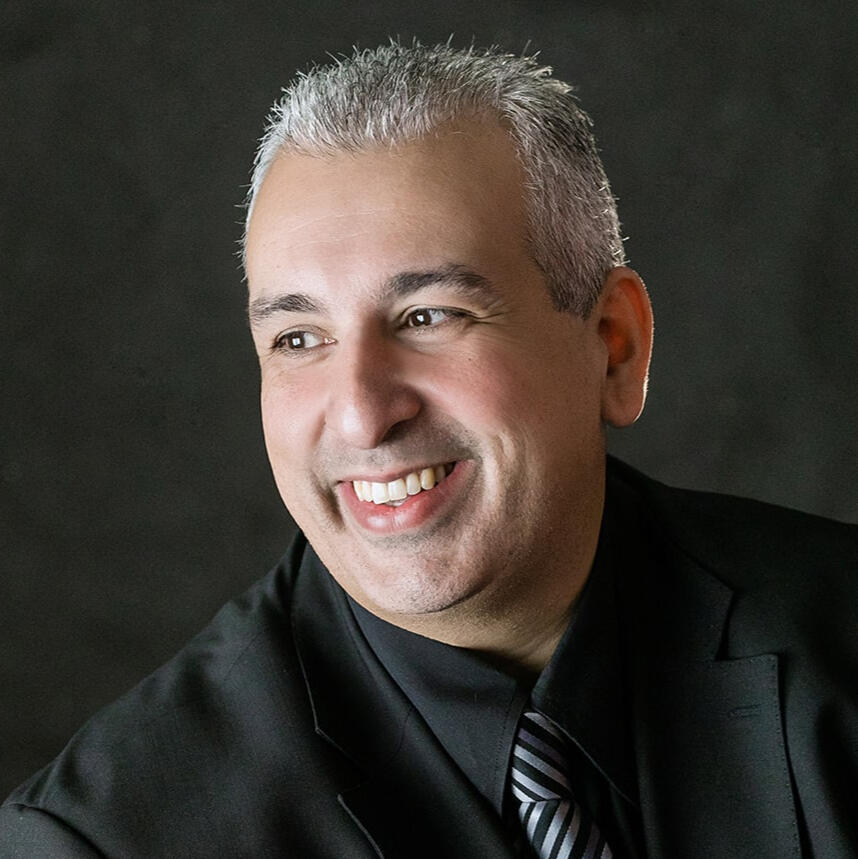
Paul Lambis is an award-winning media professional and dynamic entrepreneur with a proven track record in marketing strategy, and brand development. Born in Johannesburg, South Africa, he brings extensive expertise in business development, design, and real estate marketing.Born in South Africa and based in Cyprus, Lambis serves as the Founder and CEO of Silver Thespian, a non-profit organisation dedicated to fostering cultural initiatives both locally and internationally. The organisation also spearheads pivotal business and networking events such as the Cyprus Diaspora Forum® and the CYDIA Awards®, which celebrate the achievements of the Cypriot diaspora while strengthening connections between the local community, global Cypriots, and international stakeholders.An advocate for economic growth, Lambis plays a strategic role in promoting Cypriot entrepreneurship, attracting foreign direct investment to Cyprus, and building bridges between business communities worldwide.In addition to his business acumen, he is an accomplished author, with three published works—two of which are bestsellers in Cyprus. As an award-winning playwright, he has written, produced, and directed theatrical productions that have earned widespread critical acclaim. His screenplay 74, which is currently in development, is slated to be filmed on location in Cyprus, further amplifying his influence on the cultural and creative industries.Paul Lambis is also the creator and host of Culturescope, a lifestyle and entertainment web show broadcast across multiple television networks and digital platforms, engaging the global Hellenic Diaspora.Through his multifaceted expertise and visionary leadership, Paul Lambis continues to drive innovation, cultural enrichment, and economic collaboration on a global scale.
Learn more about the Forum at: Cyprus Diaspora Forum
or
The Voice That Shapes Leaders
CEO Self-Leadership as the First KPI
"Executive teams do not change just because they attend some workshops or alignment sessions. They change because leaders behave differently." -Vaso Vardaki.-
Professional Leadership & Team Coach, Author, Trainer, and Speaker | March 2026 · 6 min read
Walk into many executive team meetings and you’ll notice something that looks like alignment. People nod. Interruptions are rare. Very few ideas are openly challenged. Occasionally, someone attempts to introduce a different perspective, but the space for that thinking to evolve is limited.The meeting ends on time. Decisions move forward. And yet, tension reappears later in side conversations. Performance stalls, innovation slows, silos quietly grow.Here is the uncomfortable truth: silence in the room is rarely a sign of harmony or agreement. It is often a signal of leadership failure. Not a failure of strategy, not a failure of talent, but a failure of self-leadership.As leaders rise in hierarchy, they gain authority, influence, and decision power. What they often lack is something far more critical: access to honest feedback, emotional regulation under pressure, and the ability to create space for collective intelligence. Without these capabilities, executive teams struggle to move from “I” to “We,” regardless of how capable the individuals around the table may be.
Power increases voice and reduces self-regulationResearch in social psychology has long shown that power changes behaviour. Senior leaders become more confident in expressing their views while becoming less receptive to others’ perspectives. Authority creates what researchers describe as “expressive entitlement”, the unconscious belief that one’s views deserve more airtime. And by that time, teams adapt.Work on psychological safety, led by Amy Edmondson, shows that senior leaders systematically overestimate how safe their teams feel to speak up. The higher the rank, the larger the perception gap. This creates a predictable dynamic:• Leaders speak more
• Teams speak less
• Problems surface later, when they are harder and more expensive to fix.The paradox is simple. The more senior the leader, the harder it becomes to behave as if the title does not exist. Doing so requires intentional self-leadership.
Why executive teams get stuck in “I” modeMany executive teams remain collections of strong individuals rather than unified leadership systems. In practice, this looks like:• Competition between peers instead of collaboration
• Unspoken conflict instead of productive disagreement
• Blame instead of ownership
• Compliance instead of commitmentThese patterns are rarely personality problems. They are system responses to leadership behaviour.Research on organisational transformations consistently shows that leadership role-modelling is a stronger predictor of success than formal change initiatives. Executive teams do not change just because they attend some workshops or alignment sessions. They change because leaders behave differently.When C-levels operate from personal agendas, emotional reactivity, or positional authority, management teams mirror those patterns. When they demonstrate regulation, curiosity, and accountability, collective ownership emerges.Culture is often described by what leaders say. In reality, it is shaped by what leaders repeatedly tolerate and consistently model.
Self-leadership is not “soft work.” It is performance infrastructure.If self-leadership were treated as a business capability rather than a personal development luxury, it would include three core executive competencies.1. Emotional regulation under pressure
Leaders transmit emotional states. Research on emotional contagion shows that executive mood directly affects team engagement, trust, and risk-taking behaviour.When senior leaders cannot regulate stress, frustration, or defensiveness, even when those emotions are not explicitly expressed:• Meetings become emotionally charged
• People shift into self-protection
• Decision quality declinesWork on resonant leadership demonstrates that emotionally regulated leaders create more stable climates and stronger performance outcomes.Self-leadership begins with controlling the emotional temperature of the room.2. Cognitive bias management
Every leader carries biases. The risk is not having them. It is operating as if you don’t.Decades of research on decision-making, including the work popularised by Daniel Kahneman, show that executives consistently fall into confirmation bias, overconfidence, and escalation of commitment, especially under pressure.Self-led CEOs slow down thinking. They challenge their own certainty. They design decision processes that invite dissent before consensus. Without this discipline, leadership becomes opinion-driven rather than evidence-driven, and authority quietly replaces judgment.3. Holding space before acting
High-performing leaders resist the impulse to immediately “fix.” They listen, ask, and create space for others to contribute. Research on learning organisations shows that inquiry-based leadership produces higher adaptability and innovation. Holding space is a strategic discipline, not passive leadership. Teams speak up when leaders model curiosity before authority.
The feedback gap: the first warning signalIf a C-Level manager wants to understand whether their self-leadership is strengthening or weakening the executive team, one indicator stands out.How often do you receive honest upward feedback?Research on self-awareness shows that senior leaders consistently overestimate how accurately they are perceived. As authority increases, feedback decreases. People self-censor. The KPI is not popularity. It is whether people challenge ideas early, openly, and without fear.No feedback does not mean no problems. It means lack of psychological safety to the point where people protect their reputation more than they protect team performance.
Difficult conversations reveal leadership maturityA second indicator is how difficult conversations unfold. When tough discussions consistently end in silence, superficial agreement, or emotional withdrawal, that is not alignment. It is suppression.Productive leadership conversations are marked by emotional regulation, low judgment, high curiosity and clear next steps.But when leaders bring emotional volatility, defensiveness, or positional dominance into hard conversations, teams respond with compliance, not commitment. Silence after conflict is not peace, it is unresolved tension waiting to resurface.
From “I” to “We”: what changes when self-leadership improvesWhen CEOs treat self-leadership as a performance metric, measurable shifts occur:• Feedback moves faster through the system
• Executive teams self-correct without constant intervention
• Conflict becomes productive instead of personal
• Accountability becomes shared, not hierarchicalResearch on team effectiveness, including Google’s Project Aristotle, consistently points to psychological safety as the strongest predictor of performance. That safety does not start in HR. It starts in leadership behaviour. High-performing executive teams are not those with the smartest individuals, but those with leaders disciplined enough to regulate themselves first and make sure psychological safety is high in the team.
The CEO’s real performance mirrorMany leaders invest heavily in hiring better people, restructuring teams, and launching transformation initiatives. Far fewer invest with the same seriousness in examining how their own behaviour shapes the system.The uncomfortable reality is this: Organizational results are not only a reflection of strategy. They are a reflection of the systemic, relational, and behavioural environment leaders create.Culture does not change through declarations. It changes through what leaders repeatedly model, tolerate, and reinforce. This is why executive teams do not move from “I” to “We” through alignment sessions alone. They change when leaders learn to regulate before reacting, listen before directing, and create space before asserting authority.Silence in the meeting room is not efficiency. It is lost intelligence. And lost intelligence is one of the most expensive leadership failures organisations can afford.If self-leadership is not treated as the first KPI at the top, every other KPI becomes harder to achieve than it needs to be.
By Vaso Vardaki for Top 10 C-Suite Voices Global Edition
Editor’s Note:We chose to open this initiative with vasovardaki.com & bluewalnut.co for a reason. Before strategy becomes culture, and before culture becomes performance, leadership shows up first in behaviour. Strong executive coaching is not about polishing image or supplying ready-made answers. At its best, it sharpens self-awareness, strengthens judgment, and helps leaders create the conditions in which trust, challenge, and collective intelligence can actually exist. This piece sets the tone for "Top 10 C-Suite Voices - Global Edition" exactly where it should begin: not with status, but with the discipline required to lead well.
About Vaso Vardaki:
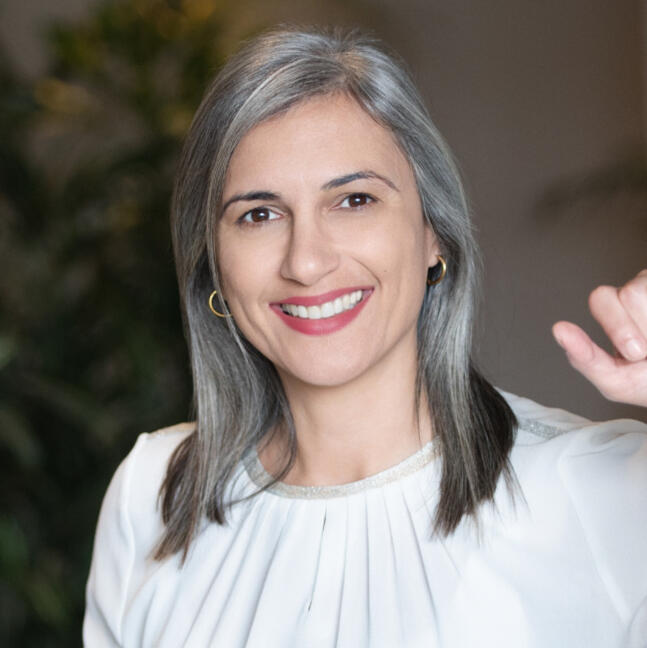
Vaso Vardaki is a Professional Leadership & Team Coach, author, trainer, and speaker with extensive experience in managing teams and leadership positions in corporate environments as well as collaborations with multinational and large retail companies.Her expertise lies in supporting leaders and teams unleash their personal and professional potential, create cultures of trust and engagement, and bring results.
Learn more at: vasovardaki.com & bluewalnut.co
or
Explore our "Why"
The Top 10 C-Suite voices
or
Explore your Sponsorship Options with:
The Top 10 C-Suite Voices
Partnerships
2027 Edition
FORUMS & GALA
The Top Voices Forum Series - 2027
A different kind of room.
By design.From 2027, Top Voices begins a deliberately small series of half-day Strategic Forums — invitation only, single-thematic, and built for the conversations the market routinely fails to host.This is not a summit. There is no multi-track agenda. There is no exhibition floor. Each Forum is anchored in one alpha thematic and built around four structural blocks:🎙 The Keynote - a single recognised authority on the day's thematic, opening the room with a clear position to argue with.💬 Three Dialogues, three formats:
→ Chatham House Dialogue — closed-door, non-attributable, structurally honest.
→ Fireside Conversation - slower, deeper, one or two voices at a time.
→ Cross-Examination Panel — moderated, deliberately contested, designed for productive friction.Every seat in the room is filled by invitation. Every voice on the stage has done the work. Nothing about the day is decorative.What this delivers for the C-Suite.
A room where peer-level conversation is possible without performance - where leadership is sharpened against operating reality, not against an audience. No press. No promotion. No platform-building. Just the questions executives actually carry into Monday morning.Cyprus 2027 - Forum I, II, III
The Series launches in Cyprus across 2027 and closes with The Top Voices Gala - Cyprus Edition - the first formal recognition night for the leaders shaping the next decade of work across HR, C-Suite, and Employee verticals.Forum I - The Architecture of People Systems
How HR infrastructure - data, payroll, compliance, talent flow - quietly determines whether a strategy actually executes.Forum II - Cross-Generational Leadership
Four generations in one workforce. Four leadership operating systems in one boardroom. What the next decade of leadership will actually require.Forum III - Workforce at Sea
The leadership and HR architecture behind global maritime and shipping - a sector where Cyprus is structurally central and where the rest of the world has not been paying enough attention.Additional thematics - AI in the workforce, cross-border talent and EOR realities, the CHRO–CEO compact, trust as operating system, the compliance edge - roll out across 2027–2029.📅 Forum I: Q1 2027, Limassol [stay tuned]
📅 Forum II: Q2 2027, Limassol [stay tuned]
📅 Forum III: Q3 2027, Limassol [stay tuned]
🗳 Gala voting: opens mid-2027 [stay tuned]
🏆 Top Voices Gala: Q4 2027, Cyprus*The Gala - Cyprus, Late 2027
The 2027 Series closes with The Top Voices Gala - the first formal recognition of the executives whose leadership has translated strategy into structure, structure into execution, and execution into measurable competitive advantage - at the boardroom level and beyond. Selection methodology, voting architecture, and final criteria will be published mid-2027.From Cyprus, Outward
Cyprus is the launch base, not the limit. The Forums and the Gala are architected to travel - across the European Union, the United Kingdom, the Middle East, and beyond - through 2028 and 2029. Each edition will preserve the same structural discipline: one thematic, three dialogue formats, one room, one room only.On Strategic Partners
Partner integration is editorial, not transactional.
A Title Partner co-presents the Forum and brings one curated stage moment - moderating a Dialogue or framing the day's thematic. Logos appear with intent, not by default. Selection is curated, never auctioned.Organisations interested in becoming a thematic partner for a 2027 Forum may reach out via the [Partnerships] page.All Forum and Gala dates, locations, thematics, formats, partners, attendance lists, and the timing - or holding - of any event referenced on this page are determined, scheduled, modified, postponed, relocated, restructured, or, where required, withdrawn at the sole and exclusive discretion of Top Voices and its operating entity. Nothing on this page constitutes a guarantee, offer, commitment, or contractual representation that any Forum or the Gala will take place as described, or at all. Editorial and operational decisions are made solely to protect the standard, scale, and integrity these events demand.
The curator behind the scenes
Founder
This platform wasn’t crafted in a strategy offsite.
It was born from something sharper — fatigue and intent.Fatigue with recycled leadership panels, scripted interviews, and visibility that’s purchased, not earned.Intent to remind the world that leadership isn’t a title — it’s the weight of every decision that shapes culture, trust, and consequence.Top10CSuiteVoices.com is curated by Vasileios Ioannidis, founder of the The Top 10 Voices Ecosystem — a Cyprus-based Tectonic HR™ Architect and Fractional CHRO, whose work through HackHR.org redefines how leadership systems scale, govern, and sustain.This isn’t a ranking.
This isn’t PR.This is a record of accountability — where influence is proven, not performed.One leader at a time.
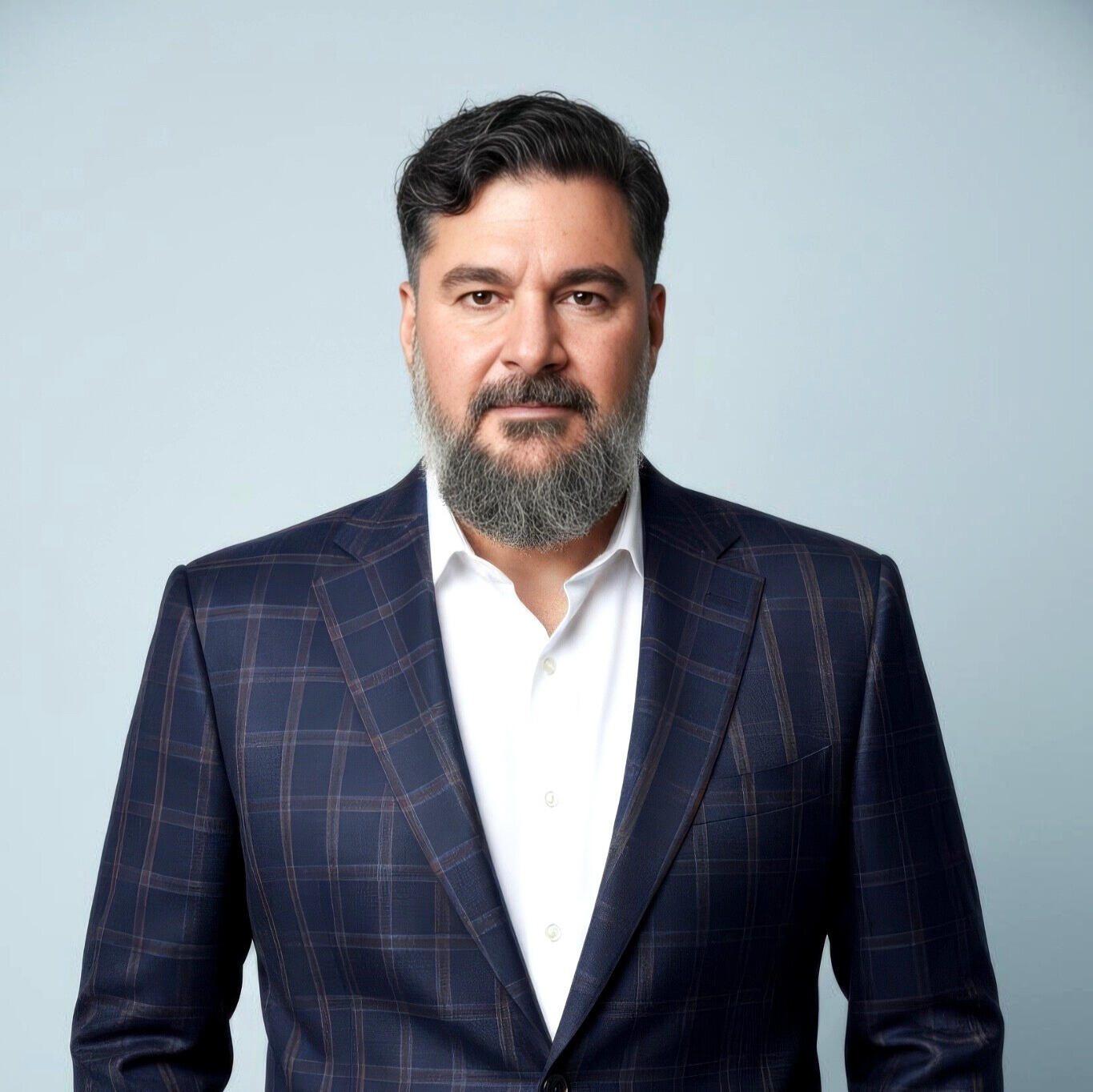

A quiet beginning to something loud.
The Top 10 HR Voices was only the prologue.
🜁What’s NextWe challenged HR to confront its own reflection.
We handed the microphone to employees — the ones who feel the impact first.
We stepped into the boardroom — where accountability claims to live.
But the story doesn’t end in corner offices.
Because leadership isn’t measured by the titles in a room —
but by the ripples that room creates.
The next chapter of the ecosystem goes beyond roles, beyond hierarchy:
Top 10 Voices: The System
A global ledger of how power — economic, cultural, and technological — shapes the future of work.Where:
• Trust is not assumed — it is audited.
• Authority is not a privilege — but a contract.
• Leadership is not defined by who speaks — but who listens, learns, and changes.This isn’t a transition.
It’s a reckoning.Every voice we elevate from here is another pressure point on the system itself.If you’re reading this,
you’re already part of the test.
Thank you
The relevant department will reach out to you shortly.
SORRY!This Initiative Is StrictlyINVITE ONLY